
The pursuit of effective and sustainable weight loss solutions has reached a new pinnacle with Eli Lilly's groundbreaking triple agonist, retatrutide. Recent Phase III trial data has not only solidified Lilly's position at the forefront of obesity treatment but has also set a new benchmark for efficacy, potentially reshaping the future of metabolic health management.
Retatrutide: A Triple Threat in Obesity Treatment
Retatrutide, a novel investigational drug developed by Eli Lilly and Company, represents a significant advancement in the field of weight loss. Unlike many existing treatments that target one or two hormonal pathways, retatrutide uniquely activates three key receptors: glucagon-like peptide-1 (GLP-1), glucose-dependent insulinotropic polypeptide (GIP), and glucagon. This multi-pronged approach aims to address the complex biological mechanisms underlying obesity and metabolic dysfunction.
The drug's mechanism of action is designed to leverage the benefits of each receptor activation. GLP-1 agonists are well-established for their role in promoting satiety, slowing gastric emptying, and improving glycemic control. GIP, another incretin hormone, also plays a role in insulin secretion and glucose regulation, and its combination with GLP-1 has shown enhanced weight loss effects. The addition of glucagon agonism is believed to further enhance energy expenditure and lipolysis (fat breakdown).
The TRIUMPH-4 Study: A Glimpse of Unprecedented Efficacy
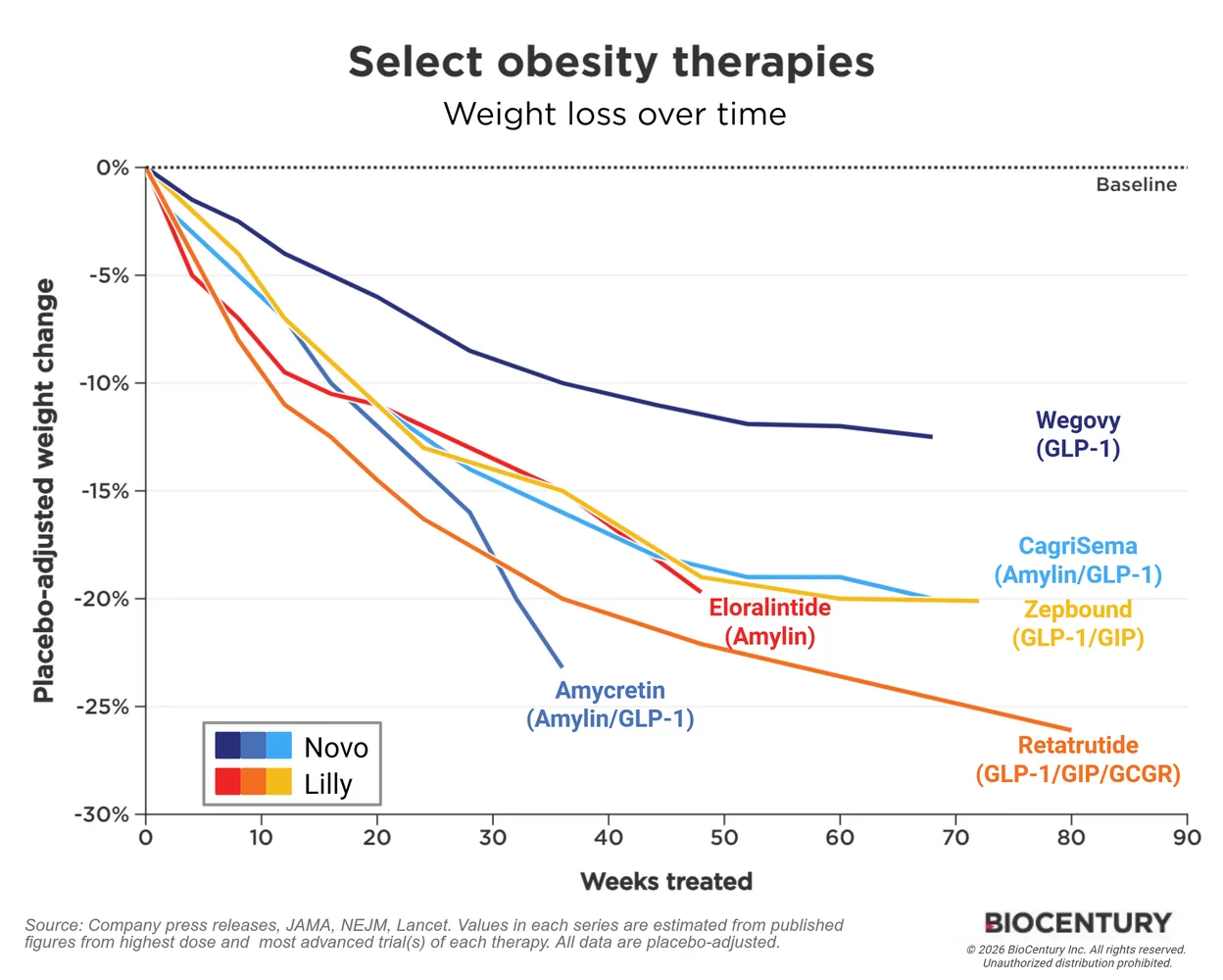
The excitement surrounding retatrutide was amplified by the release of preliminary data from the Phase III TRIUMPH-4 study. This trial specifically investigated the efficacy and safety of retatrutide in individuals with obesity and osteoarthritis. The results were nothing short of remarkable, demonstrating placebo-adjusted weight loss of up to an astonishing 26.6%.
This level of weight loss significantly surpasses the efficacy seen with many currently available weight loss medications, including popular GLP-1 receptor agonists like semaglutide (found in Ozempic and Wegovy) and tirzepatide (found in Mounjaro and Zepbound). The TRIUMPH-4 study provides compelling evidence that retatrutide's triple agonism offers a potent new avenue for individuals struggling with high body mass index (BMI) and related health complications.
Setting a New Standard: Retatrutide vs. Competitors
The weight loss drug market is rapidly evolving, with several promising therapies vying for attention. Retatrutide's emergence, particularly with its superior efficacy demonstrated in early trials, positions it as a potential frontrunner. Investors and clinicians alike have been closely watching Lilly's progress, especially in comparison to other leading treatments.
Novo Nordisk's CagriSema, a combination of semaglutide and cagrilintide, is another dual-agonist therapy that has shown significant weight loss results. However, the latest data suggests that retatrutide may outperform CagriSema in terms of the percentage of weight lost. This competitive landscape highlights the intense innovation occurring in the pharmaceutical industry to address the global obesity epidemic.
Tolerability: A Crucial Factor for Long-Term Success
While efficacy is paramount, the tolerability profile of any medication is critical for patient adherence and long-term success. Gastrointestinal side effects, such as nausea, vomiting, and diarrhea, are common with GLP-1 receptor agonists and related therapies. The key question for retatrutide is whether its exceptional efficacy comes at the cost of significantly worse tolerability.
Precision tracking for your journey
Join thousands using Shotlee to accurately track GLP-1 medications and side effects.
📱 Get the Shotlee App
Track your GLP-1 medications, peptides, and health metrics on the go with our mobile app!
Early indications from the TRIUMPH-4 study suggest that retatrutide's tolerability profile is not markedly worse than existing treatments. While side effects are present, they appear manageable for many participants, which is crucial for sustained weight loss and overall well-being. A favorable tolerability profile, combined with high efficacy, could provide retatrutide with a significant commercial edge and improve patient quality of life.
The Broader Implications for Obesity Management
The potential of retatrutide extends far beyond individual weight loss. Obesity is a complex chronic disease associated with a multitude of serious health conditions, including type 2 diabetes, cardiovascular disease, sleep apnea, and certain types of cancer. Achieving and maintaining significant weight loss can lead to substantial improvements in these comorbidities, reducing healthcare burdens and enhancing overall health outcomes.
The development of more potent and effective weight loss therapies like retatrutide offers hope for millions worldwide. For individuals who have struggled with conventional weight loss methods, these advanced peptide therapies represent a potential turning point. The ability to achieve greater weight loss can unlock significant health benefits, improving mobility, reducing medication needs for other conditions, and enhancing overall life expectancy and quality.
Tracking Progress with Shotlee
For individuals embarking on a weight loss journey with advanced therapies, meticulous tracking of progress, symptoms, and medication adherence is essential. Tools like Shotlee can be invaluable in this regard. By allowing users to log their weight, monitor side effects, record medication doses, and track other health metrics, Shotlee empowers patients and their healthcare providers with comprehensive data. This data can help optimize treatment plans, identify potential issues early, and celebrate milestones, fostering a more informed and engaged approach to health management.
Future Outlook and Next Steps
Eli Lilly is continuing to advance retatrutide through its extensive clinical development program. Further trials will be crucial to confirm its long-term safety and efficacy across diverse patient populations and to explore its potential benefits in treating other metabolic conditions. The data presented so far, however, strongly suggests that retatrutide could become a transformative therapy in the fight against obesity.
The journey from clinical trials to market approval is rigorous, but the promising results from retatrutide have undoubtedly generated significant anticipation. If approved, retatrutide could offer a powerful new option for individuals and healthcare providers seeking more effective solutions for severe obesity and its associated health risks.
| Drug | Mechanism | Phase III Weight Loss (Approx. Placebo-Adjusted) | Key Considerations |
|---|---|---|---|
| Retatrutide (Lilly) | GLP-1, GIP, Glucagon Triple Agonist | Up to 26.6% | Potentially superior efficacy, promising tolerability. |
| Tirzepatide (Lilly) | GLP-1, GIP Dual Agonist | Up to ~22.5% (e.g., SURMOUNT-1) | Currently approved for weight loss (Zepbound), strong efficacy. |
| Semaglutide (Novo Nordisk) | GLP-1 Agonist | Up to ~15% (e.g., STEP trials) | Approved for weight loss (Wegovy), widely used. |
| CagriSema (Novo Nordisk) | GLP-1, Amylin Analog Dual Agonist | Data suggests high efficacy, potentially comparable to tirzepatide. | Investigational, direct comparison data with retatrutide is ongoing. |
Practical Takeaways
- Efficacy Benchmark: Retatrutide's Phase III data sets a new high for weight loss achieved with pharmacological interventions.
- Tolerability Matters: The drug's apparent manageable side effect profile is as crucial as its efficacy for long-term patient success.
- Holistic Health: Significant weight loss can profoundly impact multiple obesity-related comorbidities, improving overall health.
- Data-Driven Journeys: Utilizing health tracking tools like Shotlee can empower individuals to actively manage their treatment and progress.
Conclusion
The unveiling of retatrutide's Phase III data marks a significant moment in the ongoing battle against obesity. Eli Lilly's triple agonist demonstrates an unprecedented level of efficacy, coupled with a tolerability profile that suggests it could be a game-changer for patients and clinicians. As research continues and regulatory pathways are navigated, retatrutide holds the promise of offering a powerful new weapon in the arsenal against a complex and pervasive chronic disease, potentially transforming the lives of millions.