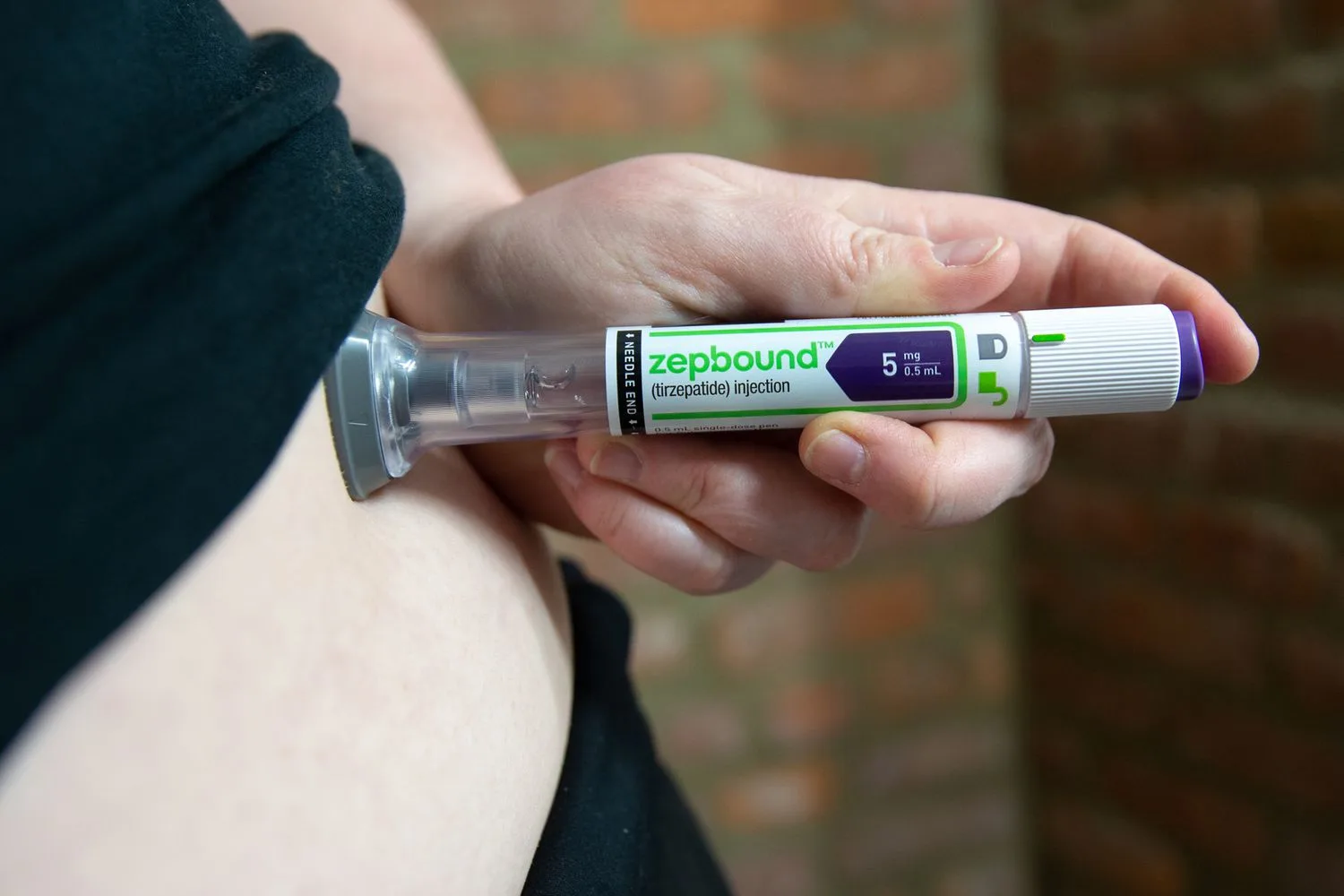

For individuals managing weight with medications like Ozempic, Wegovy, or Mounjaro, a subtle yet significant change might be occurring: the way food tastes. Recent research presented at the Annual Meeting of the European Association for the Study of Diabetes (EASD) suggests that these popular incretin-based therapies could be altering taste perception, making foods seem sweeter or saltier. This intriguing finding may offer new insights into how these medications contribute to appetite control and weight management.
Understanding the Impact of Incretin Therapies on Taste
Ozempic (semaglutide), Wegovy (semaglutide), and Mounjaro (tirzepatide) are widely recognized for their efficacy in weight management and treating type 2 diabetes. While their primary mechanisms of action involve regulating blood sugar and promoting satiety, their influence on other bodily senses, particularly taste, has been less understood. A real-world study, published in the journal Diabetes, Obesity and Metabolism, aimed to shed light on this connection.
The research, led by Othmar Moser of the University of Bayreuth, Germany, surveyed hundreds of individuals with overweight and obesity who were undergoing treatment with these medications. The goal was to explore whether changes in taste perception were associated with altered appetite, reduced cravings, and ultimately, weight loss. Professor Moser noted, "Incretin-based therapies such as Ozempic, Wegovy and Mounjaro are widely used for weight management but their effect on taste perception has been unclear." He further explained the potential clinical implications: "If changes in taste are linked to greater appetite control and weight loss, this could help clinicians better select therapies, provide more tailored dietary advice and improve long-term treatment outcomes for patients."
Study Design and Participant Demographics
The study involved 411 participants, with a majority being female (69.6%). These individuals were recruited online and were taking Ozempic, Wegovy, or Mounjaro for weight loss. The medications were distributed as follows: 148 participants were on Ozempic, 217 on Wegovy, and 46 on Mounjaro. The duration of treatment was comparable across the groups, with a median of 43 weeks for Ozempic, 40 weeks for Wegovy, and 47 weeks for Mounjaro. All participants had been on their respective treatments for at least three consecutive months.
Before starting treatment, the average Body Mass Index (BMI) was 34.7 kg/m² for the Ozempic group, 35.6 kg/m² for the Wegovy group, and 36.2 kg/m² for the Mounjaro group, indicating significant overweight or obesity at baseline. Participants were asked to report on several key areas:
- Changes in their sense of taste, specifically the perception of sweetness, saltiness, sourness, and bitterness.
- Alterations in appetite, feelings of fullness (satiety), and food cravings.
- Changes in lifestyle factors, such as smoking habits.
- Self-reported height and weight data, both before and during treatment.
The researchers also collected data on BMI reductions, adjusted for factors like treatment duration, dosage, baseline BMI, age, and sex. These reductions were substantial, with Ozempic showing a 17.4% decrease, Wegovy 17.6%, and Mounjaro 15.5%.
Key Findings: Taste Alterations and Their Link to Appetite
The study revealed that a notable portion of participants experienced changes in how they perceived flavors. Approximately one-fifth of individuals reported that food tasted sweeter than before (21.3%), and a similar proportion found it tasted saltier (22.6%). Interestingly, perceptions of bitterness and sourness remained largely unchanged.
When breaking down these findings by medication, some differences emerged:
| Medication | Increased Saltiness (%) | Increased Sweetness (%) | Decreased Appetite (%) | Increased Satiety (%) | Reduced Cravings (%) |
|---|---|---|---|---|---|
| Ozempic | 16.2 | 21.6 | 62.1 | 58.8 | 29.7 |
| Wegovy | 26.7 | 19.4 | 54.4 | 66.8 | 34.1 |
| Mounjaro | 15.2 | 21.7 | 56.5 | 63.1 | 41.3 |
Specifically, 26.7% of Wegovy users reported increased saltiness, compared to 16.2% for Ozempic and 15.2% for Mounjaro. Increases in sweetness perception were reported at similar frequencies across all groups (Wegovy: 19.4%, Ozempic: 21.6%, Mounjaro: 21.7%).
Beyond taste, the medications significantly impacted appetite and satiety:
- Reduced Appetite: More than half of the participants (58.4%) reported feeling less hungry overall. This effect was observed in 62.1% of Ozempic users, 54.4% of Wegovy users, and 56.5% of Mounjaro users.
- Increased Satiety: Nearly two-thirds of participants (63.5%) reported feeling full sooner after eating. This was noted by 58.8% of Ozempic users, 66.8% of Wegovy users, and 63.1% of Mounjaro users.
- Reduced Food Cravings: A substantial number of participants experienced a reduction in cravings. Notably, 41.3% of Mounjaro users reported a strong reduction in cravings, compared to 34.1% of those on Wegovy and 29.7% on Ozempic.
Connecting Taste Changes to Appetite Control
Crucially, further analysis revealed a significant correlation between altered taste perception and the reported changes in appetite and satiety. Participants who perceived foods as sweeter were:
Precision tracking for your journey
Join thousands using Shotlee to accurately track GLP-1 medications and side effects.
📱 Get the Shotlee App
Track your GLP-1 medications, peptides, and health metrics on the go with our mobile app!
- Twice as likely to report increased satiety compared to those whose sweetness perception remained unchanged.
- 67% more likely to report a reduction in appetite.
- 85% more likely to report a reduction in cravings.
Similarly, individuals who found food tasted saltier were approximately twice as likely (2.17 times) to also report increased satiety compared to those with unchanged saltiness perception.
Potential Mechanisms and Clinical Implications
Professor Moser suggests that these findings point to a broader impact of incretin-based drugs. "These drugs act not only in the gut and brain areas that control hunger but also on taste bud cells and brain regions that process taste and reward," he explained. "This means they can subtly change how strong flavours, like sweetness or saltiness, are perceived. This, in turn, may affect appetite."
The medications, which mimic the action of GLP-1 (glucagon-like peptide-1) and GIP (glucose-dependent insulinotropic polypeptide) hormones, are known to slow gastric emptying, increase feelings of fullness, and reduce food intake by acting on the brain's appetite centers. This new research suggests that a direct effect on taste receptors or the brain's processing of taste signals might be an additional contributing factor to their effectiveness.
Taste Changes Don't Directly Drive BMI Reduction
Despite the strong links between taste perception and appetite/satiety, the study did not find a direct correlation between changes in taste and BMI reduction. The researchers hypothesize that while altered taste can influence how satisfying or appealing food feels in the moment, thereby aiding appetite control, it is only one piece of the weight loss puzzle. "Weight loss depends on many other factors – like metabolism, long-term eating patterns, and activity – so changes to taste alone may not be enough to directly drive body weight reduction," Professor Moser elaborated.
Practical Takeaways for Patients and Clinicians
This research offers valuable insights for both patients using these medications and the healthcare professionals guiding them. For patients, understanding that taste changes are a potential side effect can be reassuring and help them adapt. For clinicians, monitoring these sensory alterations could provide a more holistic view of treatment response.
Professor Moser concluded, "Drugs like Wegovy, Ozempic and Mounjaro may alter sense of taste, making foods seem sweeter or saltier and helping people feel full sooner and less hungry." He suggests that:
- Monitoring Taste Changes: Tracking taste alterations could offer clues about treatment efficacy beyond just weight loss. It might indicate that the medication is working at a physiological level.
- Tailoring Dietary Advice: Understanding a patient's altered taste preferences could allow for more personalized dietary recommendations. For instance, if certain sweet or salty foods become overwhelmingly appealing or unappealing, alternative options can be suggested to maintain a balanced diet.
For individuals using these therapies, tools like the Shotlee app can be invaluable for tracking not just weight and medication doses, but also subjective experiences like changes in appetite, cravings, and even taste preferences. This comprehensive data can empower patients to have more informed discussions with their healthcare providers and optimize their treatment journey.
Limitations and Future Research
It is important to acknowledge the study's limitations. The research relied on self-reported data, which can be subject to individual interpretation and recall bias. Furthermore, the online recruitment method might mean the participant group wasn't entirely representative of the broader patient population using these medications. The study also highlights that correlation does not equal causation; while changes in taste are linked to appetite reduction, it's complex to definitively prove that taste changes *cause* the appetite changes.
Future research could explore these mechanisms further using objective taste testing and neuroimaging techniques to better understand how semaglutide and tirzepatide interact with the gustatory system and reward pathways in the brain. Investigating the long-term impact of these taste alterations on dietary habits and overall health outcomes would also be beneficial.
Conclusion
The findings that Ozempic, Wegovy, and Mounjaro may alter taste perception, making foods taste sweeter or saltier, add another layer to our understanding of these powerful incretin-based therapies. While these taste changes alone may not be the primary driver of weight loss, their strong association with reduced appetite, increased satiety, and diminished cravings suggests they play a supportive role in appetite regulation. This research underscores the multifaceted ways these medications work and highlights the potential for personalized treatment strategies that consider a patient's sensory experiences alongside traditional health metrics.