
The landscape of type 2 diabetes management is continually evolving, with researchers relentlessly seeking more effective treatment strategies. Recent findings presented at the American Diabetes Association (ADA) annual meeting offer a glimpse into a potentially powerful new therapeutic approach: the combination of cagrilintide and semaglutide. This once-weekly dual therapy has demonstrated significant promise in improving glycemic control, particularly in individuals whose type 2 diabetes is not adequately managed with existing treatments.
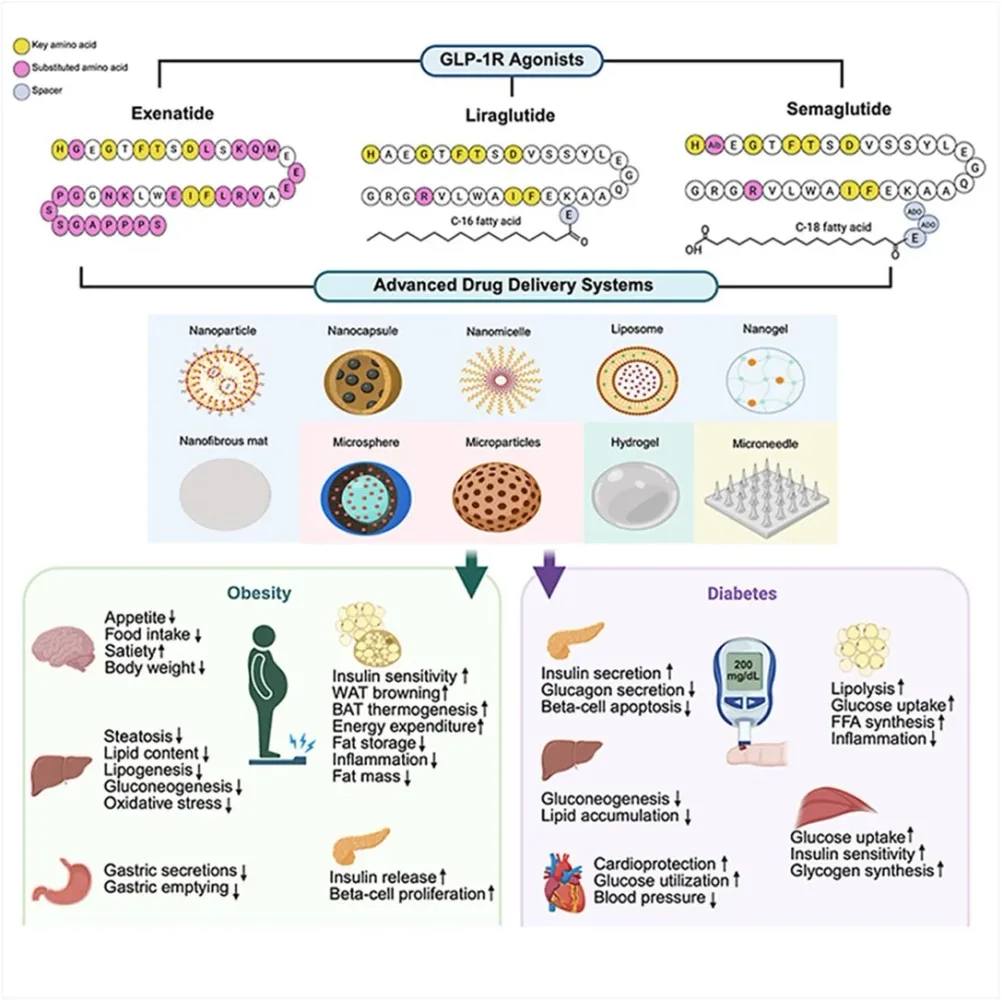
Cagrilintide, a novel amylin receptor agonist, works by mimicking the action of amylin, a hormone that helps regulate blood sugar after meals. Semaglutide, a well-established glucagon-like peptide-1 (GLP-1) receptor agonist, is already widely recognized for its efficacy in improving glycemic control and promoting weight loss. The synergistic potential of combining these two mechanisms of action has been the focus of several recent studies, with results suggesting a significant advancement in managing this chronic condition.
Understanding the Mechanisms: Cagrilintide and Semaglutide
To fully appreciate the significance of these new findings, it’s essential to understand how each component of this dual therapy works:
Cagrilintide: The Amylin Receptor Agonist
Cagrilintide is designed to activate the amylin receptor. Amylin, a hormone co-secreted with insulin from pancreatic beta cells, plays a crucial role in postprandial glucose regulation. Its functions include:
- Slowing gastric emptying: This reduces the rate at which food enters the small intestine, leading to a more gradual rise in blood glucose levels after meals.
- Suppressing glucagon secretion: Glucagon is a hormone that raises blood sugar levels. By inhibiting its release, amylin helps to prevent excessive glucose production by the liver.
- Promoting satiety: Amylin contributes to feelings of fullness, which can help reduce food intake and support weight management.
By mimicking these actions, cagrilintide aims to improve postprandial glucose control and potentially contribute to weight loss.
Semaglutide: The GLP-1 Receptor Agonist
Semaglutide, a member of the GLP-1 receptor agonist class, has become a cornerstone in the management of type 2 diabetes and obesity. Its multifaceted actions include:
- Stimulating insulin secretion: Semaglutide enhances the release of insulin from the pancreas in a glucose-dependent manner, meaning it stimulates insulin release when blood sugar levels are high.
- Inhibiting glucagon secretion: Similar to amylin, GLP-1 agonists suppress glucagon release, further contributing to lower blood glucose levels.
- Slowing gastric emptying: This effect helps to reduce postprandial hyperglycemia.
- Promoting satiety and reducing appetite: This leads to a decrease in calorie intake and is a significant factor in its weight loss benefits.
The combination of these two powerful mechanisms—amylin agonism and GLP-1 agonism—suggests a potent synergy for glycemic control and weight management.
Key Study Findings: A Closer Look
Three pivotal studies, published concurrently in The Lancet Diabetes & Endocrinology and The Lancet, provided the data supporting the efficacy of once-weekly cagrilintide plus semaglutide. These studies investigated the combination therapy across different patient populations with type 2 diabetes, assessing its impact on hemoglobin A1c (HbA1c) levels.
Study 1: Patients on Basal Insulin
In a study led by Julio Rosenstock, M.D., researchers evaluated 274 adults with type 2 diabetes who were using basal insulin. Participants were randomly assigned to receive either cagrilintide-semaglutide (at doses of 2.4 mg each or 1.0 mg each) or a placebo for 40 weeks.
The results were compelling:
- The cagrilintide-semaglutide 2.4 mg combination led to a mean HbA1c reduction of -2.33 percent.
- The cagrilintide-semaglutide 1.0 mg combination showed a mean HbA1c reduction of -2.10 percent.
- In contrast, the placebo group experienced a mean HbA1c reduction of only -0.66 percent.
These findings indicate that the dual therapy significantly outperformed placebo in lowering HbA1c levels in this patient group.
Study 2: Patients on Metformin (with or without SGLT2i) and Overweight/Obesity
A larger study, involving 2,713 adults with inadequately controlled type 2 diabetes who were receiving metformin (with or without a sodium-glucose cotransporter 2 inhibitor, SGLT2i) and were overweight or obese, was conducted by John B. Buse, M.D., and colleagues. This study compared cagrilintide-semaglutide (2.4 mg each) against semaglutide 2.4 mg alone, cagrilintide alone, and placebo over 68 weeks.
The key outcomes showed:
Precision tracking for your journey
Join thousands using Shotlee to accurately track GLP-1 medications and side effects.
📱 Get the Shotlee App
Track your GLP-1 medications, peptides, and health metrics on the go with our mobile app!
- The cagrilintide-semaglutide 2.4 mg combination achieved a mean HbA1c reduction of -1.91 percentage points.
- Semaglutide 2.4 mg alone resulted in a mean HbA1c reduction of -1.75 percentage points.
While both treatments were effective, the combination therapy demonstrated a statistically significant greater reduction in HbA1c compared to semaglutide monotherapy in this broader population. This suggests that adding cagrilintide can further enhance glycemic control.
Study 3: Patients on Diet and Exercise (and potentially other medications)
In a trial led by Vanita R. Aroda, M.D., adults with type 2 diabetes inadequately controlled by diet and exercise were randomized to receive once-weekly subcutaneous cagrilintide 2.4 mg plus semaglutide 2.4 mg, cagrilintide 1.0 mg plus semaglutide 1.0 mg, or placebo for 40 weeks. This study included 62, 63, and 64 participants in the respective arms.
The HbA1c changes observed were:
- Cagrilintide-semaglutide 2.4 mg each: -1.8 percentage points
- Cagrilintide-semaglutide 1.0 mg each: -1.5 percentage points
- Placebo: -0.1 percentage points
These results reinforce the efficacy of the combination therapy, showing substantial improvements in HbA1c compared to placebo, even in a population not yet on more advanced diabetes medications.
A Potential New Therapeutic Tool
The consistent and significant HbA1c reductions observed across these diverse patient groups underscore the potential of cagrilintide and semaglutide as a powerful new therapeutic option. Dr. Rosenstock's statement highlights this sentiment, suggesting that these findings "support a potential new therapeutic tool to effectively improve HbA1c levels well below 7 percent in such a challenging population."
Achieving and maintaining HbA1c levels below 7 percent is a critical goal in type 2 diabetes management, as it is associated with a reduced risk of long-term microvascular and macrovascular complications. The ability of this dual therapy to achieve these targets, even in individuals with difficult-to-control diabetes, is particularly noteworthy.
Implications for Weight Management
Beyond glycemic control, both cagrilintide and semaglutide have demonstrated effects on appetite and satiety, leading to weight loss. The combination therapy is therefore likely to offer significant benefits for weight management in individuals with type 2 diabetes who are also overweight or obese. This dual benefit—improved blood sugar control and weight reduction—is highly desirable, as excess weight is a major contributor to insulin resistance and the progression of type 2 diabetes.
Tracking Your Progress with Shotlee
For individuals managing type 2 diabetes, especially those exploring new treatment options like cagrilintide and semaglutide, diligent health tracking is paramount. Tools like Shotlee can be invaluable in monitoring key health metrics. Whether it's tracking:
- Blood glucose levels: Regularly recording readings helps assess the impact of the medication.
- HbA1c trends: While HbA1c is a long-term measure, tracking it over time provides a clear picture of treatment effectiveness.
- Medication adherence: Ensuring consistent dosing is crucial for optimal results.
- Symptom tracking: Noting any side effects or improvements in symptoms can provide valuable feedback to your healthcare provider.
- Diet and exercise: Correlating lifestyle factors with your health data can reveal powerful insights.
By meticulously logging this information, patients can work more effectively with their healthcare team to personalize their treatment plan and maximize the benefits of their therapy.
Considerations and Future Directions
It is important to note that several authors involved in these studies have disclosed ties to Novo Nordisk, the company developing cagrilintide. This is common in pharmaceutical research and does not necessarily invalidate the findings, but it is a relevant detail for context. Further research and long-term studies will be essential to fully understand the safety profile, long-term efficacy, and optimal use of cagrilintide-semaglutide in various patient populations.
The development of such combination therapies represents a significant step forward in the ongoing effort to provide more effective and comprehensive solutions for individuals living with type 2 diabetes. As these treatments progress through the regulatory process, they hold the potential to become a vital part of the therapeutic armamentarium.
Conclusion
The once-weekly combination of cagrilintide and semaglutide has emerged as a highly promising strategy for improving glycemic control in adults with type 2 diabetes. The robust data presented at the ADA meeting, demonstrating significant HbA1c reductions across different treatment regimens and patient profiles, offers renewed hope for effective diabetes management. As research continues, this dual-acting therapy could represent a significant advancement in helping individuals achieve their health goals and live healthier lives.