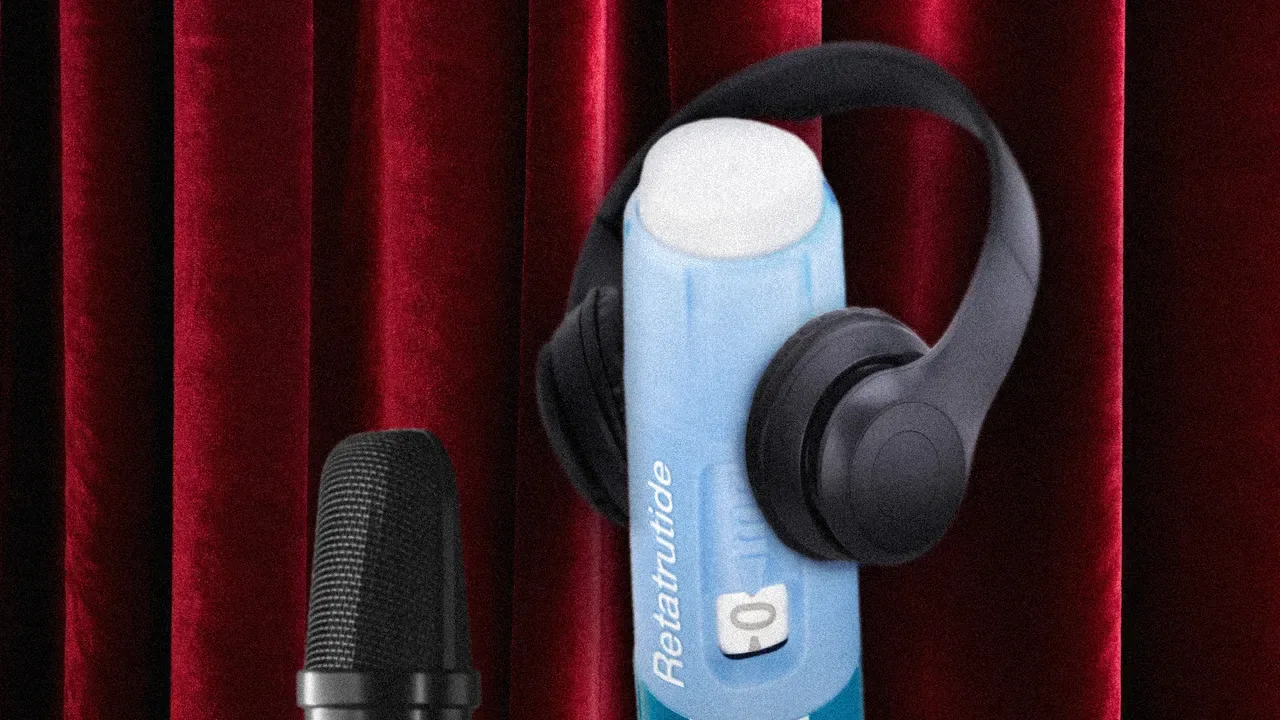

Retatrutide, often called "reta" by early adopters, is capturing the attention of fitness bros, podcast hosts, and online influencers. From Andrew Huberman's podcast shoutout to looksmaxxing guru Braden Peters (a.k.a. Clavicular) incorporating it into his leanmaxxing stack, this new weight-loss peptide is generating unprecedented hype. "Retatrutide is a real challenge to those that liked to bash on other GLP-1 agonists, etc., because it's used by (soon) everyone," Huberman posted. Even as longevity enthusiasts debate its merits, the internet's vanguard is self-medicating with obesity drugs like never before.
What Is Retatrutide and Why the Buzz?
Retatrutide is a breakthrough weight-loss peptide showing immense promise in treating obesity and potentially other metabolic conditions. In an era of rapid advancements in obesity medications, experts speaking to GQ position Retatrutide as a major leap forward. Unlike previous drugs that target one or two receptors for appetite, blood sugar, and insulin sensitivity, Retatrutide stands out by activating three key receptors: GLP-1, GIP, and glucagon.
This multi-pathway approach addresses why young, fit individuals—often not clinically obese—are turning to it. Fitness bros seek enhanced fat loss, lean muscle preservation, and metabolic optimization, making Retatrutide's profile particularly appealing for body composition goals beyond traditional dieting.
The Rise of Peptides in Fitness and Metabolic Health
Peptides like Retatrutide represent the next evolution in metabolic therapies. While GLP-1 agonists exploded in popularity, the peptide space is booming with compounds offering targeted fat reduction. Retatrutide's potential broader impact on the health system could surpass even Ozempic, as it influences liver function, gastrointestinal processes, and adipose tissue directly.
For patients and enthusiasts alike, understanding peptides means recognizing their role in mimicking natural hormones to regulate energy balance. This aligns perfectly with the fitness community's focus on science-backed optimization.
How Retatrutide Works: The Triple Agonist Mechanism
Retatrutide's uniqueness lies in its triple-agonist action. You've likely heard of semaglutide, the GLP-1 agonist in brands like Ozempic and Wegovy. These mimic natural hormones to regulate appetite and blood sugar, improving insulin sensitivity, slowing gastric emptying, and boosting satiety to curb cravings.
From Single to Dual: Evolution to Tirzepatide
Then came tirzepatide, a dual agonist hitting GLP-1 and GIP receptors (brands: Mounjaro, Zepbound). "They added a second feature, which basically was management of glycogen," explains Erik Nuveen, MD, a triple board-certified surgeon with over 20 years treating obesity and metabolic disease, and co-founder of Olympus Cosmetic Group. This dual mechanism enhances blood sugar control and drives greater weight loss than semaglutide alone.
Retatrutide: Adding Glucagon for Superior Fat Loss
Retatrutide elevates this by incorporating a glucagon receptor agonist. "It works primarily on the liver, in the gastrointestinal tract, and even on the fat tissue," says Jessica Duncan, MD, DABOM, DABA, board-certified obesity medicine physician and Chief Medical Officer at Ivim Health. "The glucagon effect is really what sets retatrutide apart from other medications, and that's because it has a little bit more of an effect on the liver and the fat tissue."
"It's definitely the most effective means ever created through science to reduce the storage of fat," Dr. Nuveen told GQ. By tackling weight loss via multiple simultaneous pathways, Retatrutide promotes direct fat mobilization, making it a game-changer for stubborn adipose tissue.
Precision tracking for your journey
Join thousands using Shotlee to accurately track GLP-1 medications and side effects.
📱 Get the Shotlee App
Track your GLP-1 medications, peptides, and health metrics on the go with our mobile app!
Fitness Influencers and the Hype Machine
The buzz isn't just clinical—it's cultural. Podcast host Andrew Huberman spotlighted Retatrutide last week, challenging skeptics of GLP-1s. Braden Peters declared it "the ultimate good" in a YouTube video, integrating it into his leanmaxxing regimen. Even 20-somethings with chiseled physiques are experimenting, drawn to its potential for extreme leanness without muscle catabolism.
This self-medication trend raises questions: Why risk unapproved peptides? For many, the promise of superior results outweighs caution, especially as phase 3 data emerges.
Clinical Trials and Path to FDA Approval
"It's become a hot topic, because the phase three clinical trials are now underway," Dr. Duncan notes. Phase 3 involves large-scale studies yielding robust data on efficacy and safety. "Also, it's the next sort of trigger that FDA approval is coming soon," she adds. Positive results could position Retatrutide as a cornerstone obesity therapy, accessible via prescription for those with BMI indications or metabolic risks.
Early data suggests weight reductions exceeding predecessors, with benefits for liver health and fat metabolism—key for fitness applications.
Who Should Consider Retatrutide? Patient Guidance
Primarily for adults with obesity (BMI ≥30) or overweight (BMI ≥27) with comorbidities like type 2 diabetes or cardiovascular risk. Fitness enthusiasts without clinical obesity should consult physicians, as off-label use carries risks. Discuss family history, current meds, and goals with a board-certified obesity specialist.
Start low-dose under supervision; monitor progress with apps like Shotlee for symptom tracking and adherence. Combine with diet, exercise, and resistance training to maximize fat loss while preserving muscle—ideal for the fitness bro demographic.
Safety Considerations for Triple Agonists
Like GLP-1s, expect gastrointestinal effects (nausea, slowed motility), but glucagon addition may enhance tolerability for some. Dr. Duncan and Nuveen emphasize supervised use. Long-term data from trials will clarify cardiovascular, hepatic, and endocrine impacts. Avoid if history of medullary thyroid cancer or pancreatitis.
Retatrutide vs. Alternatives: Quick Comparison
- Semaglutide (Ozempic/Wegovy): Single GLP-1; solid appetite control, ~15% weight loss.
- Tirzepatide (Mounjaro/Zepbound): Dual GLP-1/GIP; ~20-22% loss, better glycemic control.
- Retatrutide: Triple; early trials show 24%+ loss, superior fat targeting.
For metabolic health, Retatrutide's liver/fat focus offers advantages in body recomposition.
Key Takeaways: What This Means for Patients and Fitness Enthusiasts
- Retatrutide's triple action (GLP-1, GIP, glucagon) sets it apart for fat reduction.
- Hype from Huberman, Peters reflects real clinical promise in phase 3 trials.
- Experts like Drs. Duncan and Nuveen hail it as science's most effective fat-store reducer.
- Consult doctors before use; track with tools like Shotlee for optimal results.
- FDA approval looms, potentially transforming obesity and fitness protocols.
Conclusion: The Future of Weight-Loss Peptides
Retatrutide embodies the peptide revolution, blending cutting-edge science with fitness culture's drive for peak performance. Preserve its core promise—multi-receptor fat annihilation—while awaiting full data. For those serious about metabolic health, staying informed positions you ahead of the curve. Speak to your provider about integrating it safely into your regimen.