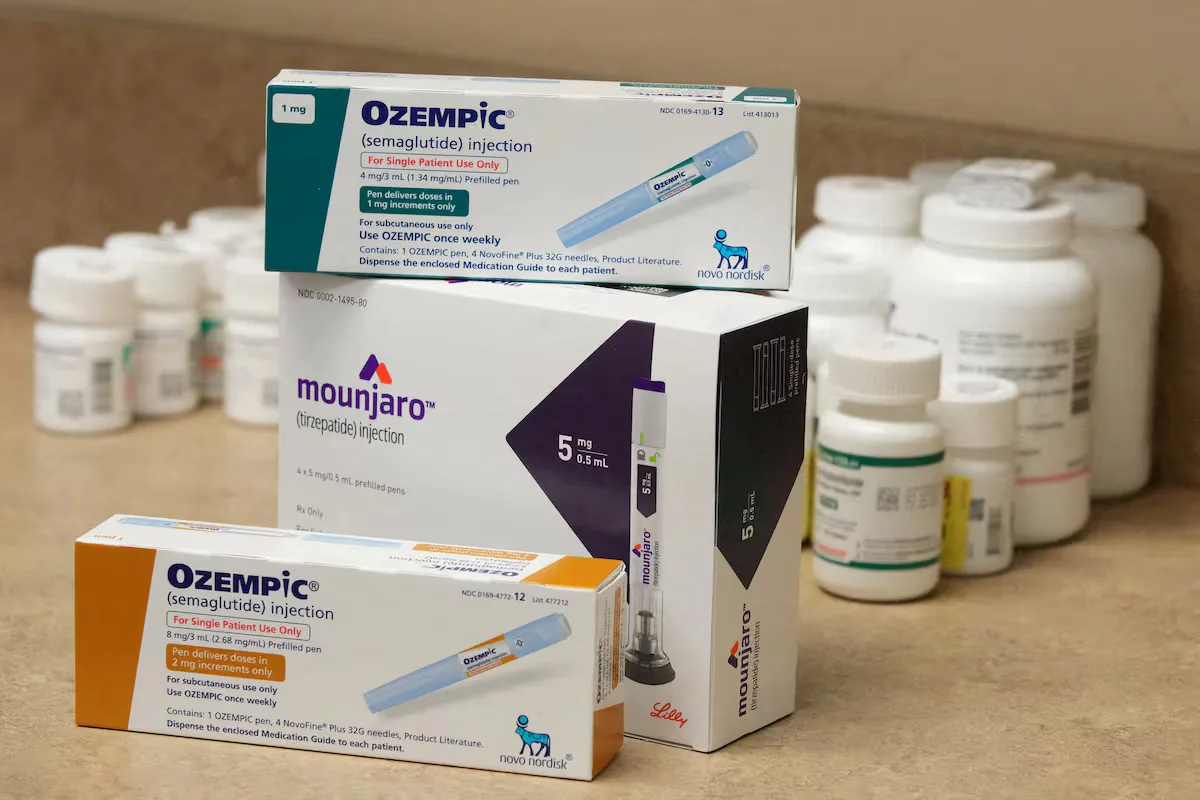

Popular GLP-1 medications, including Ozempic and Wegovy, have gained widespread recognition for their efficacy in aiding weight loss and managing type 2 diabetes. However, recent research from Rutgers University is shedding light on a less-discussed potential benefit: a possible association with a reduction in violent behavior. This groundbreaking study, published in the journal Criminology, delves into whether GLP-1 receptor agonists might influence violent criminal behavior in adults, specifically by altering the impact of impulsivity and alcohol consumption – two factors strongly correlated with aggression.
Investigating the Link Between GLP-1 Agonists and Violent Behavior
The Rutgers University study aimed to explore a novel question: do GLP-1 receptor agonists influence violent criminal behavior? To address this, researchers meticulously analyzed data collected from a 2025 survey encompassing 7,521 adults across the United States. The core of their analysis focused on a subset of 821 individuals who reported using a GLP-1 medication at some point. By comparing current users of these medications with former users, the team sought to understand how ongoing GLP-1 use might affect the relationship between violent actions, impulsivity, and alcohol consumption.
Violent behavior was assessed using a validated self-report measure, which included questions about actions such as fighting, assault, and robbery. The researchers hypothesized that the well-established pathways leading from impulsivity and alcohol use to violent behavior might be altered by the pharmacological effects of GLP-1 medications.
Key Findings on Impulsivity and Alcohol's Influence
The study yielded compelling results. The lead author, Daniel Semenza, director of research at the New Jersey Gun Violence Research Center and associate professor at the Rutgers School of Public Health, highlighted the study's most significant finding: "The strongest finding in the study was that the well-established link between impulsivity and violent behavior was substantially weaker among current GLP-1 users compared to former users."
Across the entire sample, individuals with higher levels of impulsivity and those who reported greater alcohol consumption were more likely to exhibit violent behavior. However, this association was markedly less pronounced in individuals currently taking GLP-1 medications. Specifically, the research indicated:
- The relationship between impulsivity and violent behavior was approximately 62% weaker among current GLP-1 users compared to former users.
- The connection between alcohol use and violent behavior was approximately 52% weaker among current users. While this finding was substantial, the researchers noted that it was not as consistently observed across all additional sensitivity analyses performed.
Christopher Thomas, an assistant professor at Rutgers University-Camden and co-author of the study, offered an interpretation of these findings: "Our findings are consistent with these medications working like cognitive behavioral therapy, weakening the path from impulse to action rather than eliminating impulsivity itself." This suggests that GLP-1 medications may not be directly reducing impulsive tendencies, but rather dampening the likelihood that an impulsive thought translates into a violent action.
Understanding the Potential Mechanisms
While the study did not definitively pinpoint the exact biological or psychological mechanisms at play, the observed effects align with the known actions of GLP-1 receptor agonists. These medications are primarily known for their roles in regulating blood glucose and promoting satiety, which can lead to reduced food intake and subsequent weight loss. However, GLP-1 receptors are also found in areas of the brain associated with mood regulation, reward pathways, and impulse control.
It is plausible that by interacting with these neural pathways, GLP-1 medications could modulate neurotransmitter activity or influence brain regions involved in decision-making and emotional regulation. This could, in turn, lead to a reduced propensity for acting on aggressive impulses, particularly when combined with factors like alcohol consumption, which is known to lower inhibitions.
Comparing GLP-1s to Other Interventions
The comparison of GLP-1 medications to cognitive behavioral therapy (CBT) is particularly insightful. CBT is a well-established therapeutic approach that helps individuals identify and change negative thought patterns and behaviors. The idea that GLP-1s might mimic some of the effects of CBT by interrupting the impulse-to-action sequence suggests a potential indirect pathway through which these drugs could influence behavior.
Precision tracking for your journey
Join thousands using Shotlee to accurately track GLP-1 medications and side effects.
📱 Get the Shotlee App
Track your GLP-1 medications, peptides, and health metrics on the go with our mobile app!
This perspective is crucial because it frames the potential benefit not as a direct suppression of aggression, but as an enhancement of self-regulation. For individuals who struggle with impulsivity, this subtle but significant shift could have profound implications for their interactions and overall safety.
Limitations and the Need for Further Research
Despite the intriguing findings, the researchers are careful to emphasize the limitations of their study. "The researchers cautioned that the study cannot prove that GLP-1 medications directly reduce violent behavior," they stated. As an observational and cross-sectional study, it is designed to identify associations and correlations, not to establish definitive cause-and-effect relationships.
Several factors could influence these results:
- Confounding Variables: Individuals who choose to take GLP-1 medications might differ in other ways from those who do not, and these differences could independently affect their propensity for violence. For example, individuals seeking weight loss or diabetes management might also be more health-conscious or have a greater desire to control their behavior.
- Self-Report Bias: The reliance on self-reported data for violent behavior, impulsivity, and alcohol use can be subject to inaccuracies or social desirability bias.
- Medication Specificity: The study grouped various GLP-1 medications. Different drugs within this class might have varying effects on behavior.
To overcome these limitations and solidify these findings, the research team stresses the necessity of future studies. They specifically called for:
- Longitudinal Studies: Tracking individuals over extended periods to observe changes in behavior after starting GLP-1 medications.
- Experimental Studies: Controlled trials where participants are randomly assigned to receive either a GLP-1 medication or a placebo, allowing for stronger causal inferences.
- Exploration of Mechanisms: Further research to understand the precise biological and behavioral pathways through which these medications might influence violence risk.
As GLP-1 medications become more prevalent, understanding their full spectrum of effects, including potential impacts on public safety and individual behavior, is paramount. Tools like Shotlee can be invaluable in tracking medication adherence, dosage, and any perceived changes in mood or behavior, providing users and their healthcare providers with valuable data for ongoing health management.
Practical Takeaways
For individuals currently using or considering GLP-1 medications like Ozempic or Wegovy, these findings offer a new perspective on the drug's potential benefits. While weight loss and diabetes management remain the primary indications, the possibility of a reduced link to violent behavior, particularly concerning impulsivity and alcohol's influence, is a noteworthy consideration.
It is crucial for patients to discuss any behavioral changes they experience with their healthcare provider. Understanding these potential effects, alongside the established benefits and risks of GLP-1 medications, can lead to more informed treatment decisions. For those managing chronic conditions, consistent monitoring and open communication with medical professionals are key.
Conclusion
The research from Rutgers University presents a compelling, albeit preliminary, association between GLP-1 medications such as Ozempic and Wegovy and a reduction in violent behavior. By potentially weakening the link between impulsivity and aggressive actions, and diminishing the influence of alcohol on violent conduct, these drugs may offer a broader range of benefits than previously understood. While more rigorous research is needed to confirm causality and elucidate the underlying mechanisms, these findings open an important new avenue for understanding the multifaceted impact of peptide therapies on human behavior and public safety.