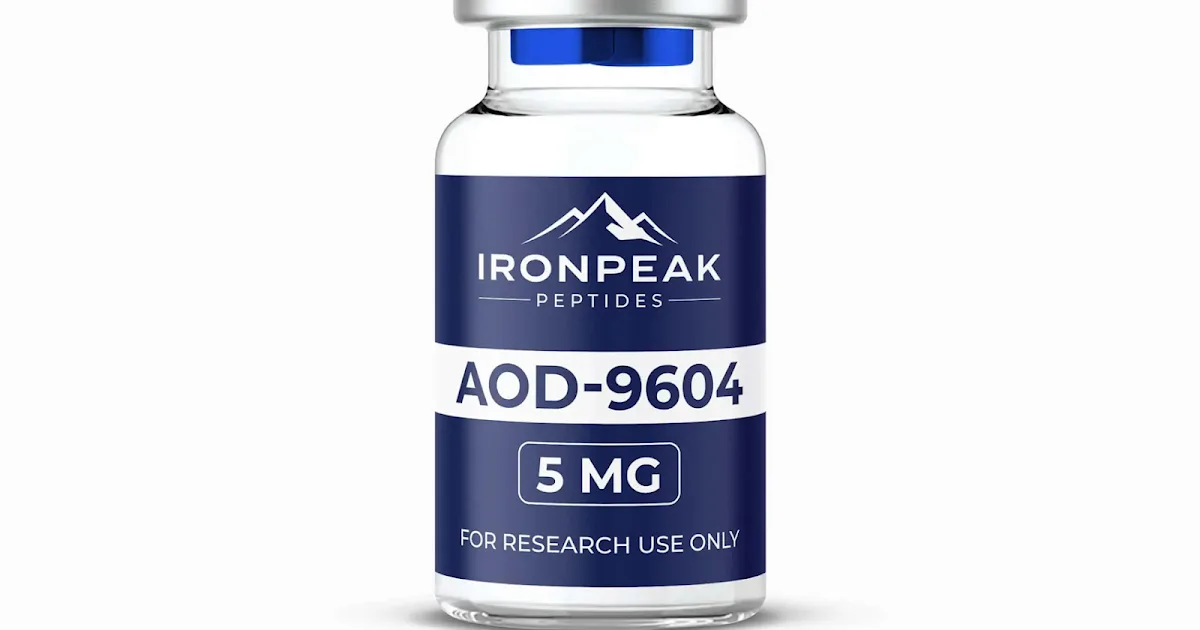
AOD-9604 Guide
HGH Fragment Dosing, Fat Loss & Research
Complete AOD-9604 guide: HGH fragment 176-191, 250–500 mcg/day dosing, fat-specific lipolysis without anabolic effects.
HGH Fragment 176-191: Fat-Targeted Lipolysis Without Anabolic Effects (2026)
AOD-9604 is a synthetic fragment of human growth hormone (amino acids 176–191) engineered to deliver GH's fat-burning effects while eliminating its anabolic and glucose-raising properties. Developed at Monash University, it activates lipolysis via beta-3 adrenergic receptors and reached Phase IIb clinical trials for obesity treatment before pivoting to nutraceutical use.
What Is AOD-9604?
AOD-9604 stands for Anti-Obesity Drug 9604 — a name assigned during Monash University research in the 1990s. Researchers discovered that the C-terminal end of human growth hormone (hGH), specifically the peptide fragment spanning amino acids 176 to 191, was responsible for GH's lipolytic (fat-burning) activity — completely separate from its anabolic (muscle-building) effects.
The key distinction: full HGH binds IGF-1 receptors and GHR receptors, raising blood glucose and driving anabolic processes. AOD-9604 binds only beta-3 adrenergic receptors on adipocytes (fat cells), activating hormone-sensitive lipase and promoting fat breakdown without affecting insulin signaling or muscle protein synthesis. This makes it one of the few fat-loss peptides with a glucose-neutral profile.
AOD-9604 reached Phase IIb clinical trials for obesity conducted by Metabolic Pharmaceuticals (Australia) in the early 2000s. While results showed modest but significant weight loss versus placebo, the company halted development after Phase IIb due to commercial concerns. The peptide was subsequently granted GRAS (Generally Recognized as Safe) status by the FDA for use in food supplements — an unusual designation that contributed to its widespread nutraceutical use.
Key Biohacking Mechanics
AOD-9604 activates beta-3 adrenergic receptors in adipose tissue — the same receptors targeted by thermogenic compounds. This activates hormone-sensitive lipase, which breaks down stored triglycerides into free fatty acids (lipolysis). These fatty acids are then available for oxidation as fuel, particularly during fasted states or exercise.
Beyond stimulating fat breakdown, AOD-9604 inhibits lipogenesis — the conversion of glucose and other substrates into stored fat. This dual action (more lipolysis + less lipogenesis) creates a favorable metabolic environment for fat loss. Animal studies showed obese mice lost significant body fat without dietary restriction on AOD-9604.
Unlike full HGH which raises blood glucose and causes insulin resistance at high doses, AOD-9604 does not bind GH receptors or stimulate IGF-1 production. Multiple Phase II trials confirmed normal fasting glucose and insulin levels with AOD-9604 — a critical safety advantage for diabetic or pre-diabetic users interested in fat loss peptides.
Emerging research suggests AOD-9604 may support cartilage repair and joint health via chondrocyte stimulation — a mechanism independent of its lipolytic effects. In vitro and early animal data show potential for osteoarthritis applications. This secondary property has made it of interest to users stacking it with BPC-157 or TB-500 for joint recovery protocols.
Beta-3 Adrenergic Activation: AOD-9604 activates beta-3 adrenergic receptors in adipose tissue — the same receptors targeted by thermogenic compounds. This activates hormone-sensitive lipase, which breaks down stored triglycerides into free fatty acids (lipolysis). These fatty acids are then available for oxidation as fuel, particularly during fasted states or exercise.
Lipogenesis Inhibition: Beyond stimulating fat breakdown, AOD-9604 inhibits lipogenesis — the conversion of glucose and other substrates into stored fat. This dual action (more lipolysis + less lipogenesis) creates a favorable metabolic environment for fat loss. Animal studies showed obese mice lost significant body fat without dietary restriction on AOD-9604.
Glucose-Neutral Profile: Unlike full HGH which raises blood glucose and causes insulin resistance at high doses, AOD-9604 does not bind GH receptors or stimulate IGF-1 production. Multiple Phase II trials confirmed normal fasting glucose and insulin levels with AOD-9604 — a critical safety advantage for diabetic or pre-diabetic users interested in fat loss peptides.
Cartilage & Joint Research: Emerging research suggests AOD-9604 may support cartilage repair and joint health via chondrocyte stimulation — a mechanism independent of its lipolytic effects. In vitro and early animal data show potential for osteoarthritis applications. This secondary property has made it of interest to users stacking it with BPC-157 or TB-500 for joint recovery protocols.
AOD-9604 Dosing Protocol
Inject into abdominal subcutaneous tissue. Oral forms lack clinical validation — injectable is the evidence-backed route. Cycle for 8–16 weeks. Use Shotlee to log doses and track body composition weekly.
Guide FAQs
Complete AOD-9604 guide: HGH fragment 176-191, 250–500 mcg/day dosing, fat-specific lipolysis without anabolic effects.
Yes. Shotlee supports tracking Aod 9604 doses, side effects, and health metrics. It is free to use.
Track Your Aod 9604 Protocol in Shotlee
Free dose logging, side effect tracking, and health metric monitoring for your complete protocol.