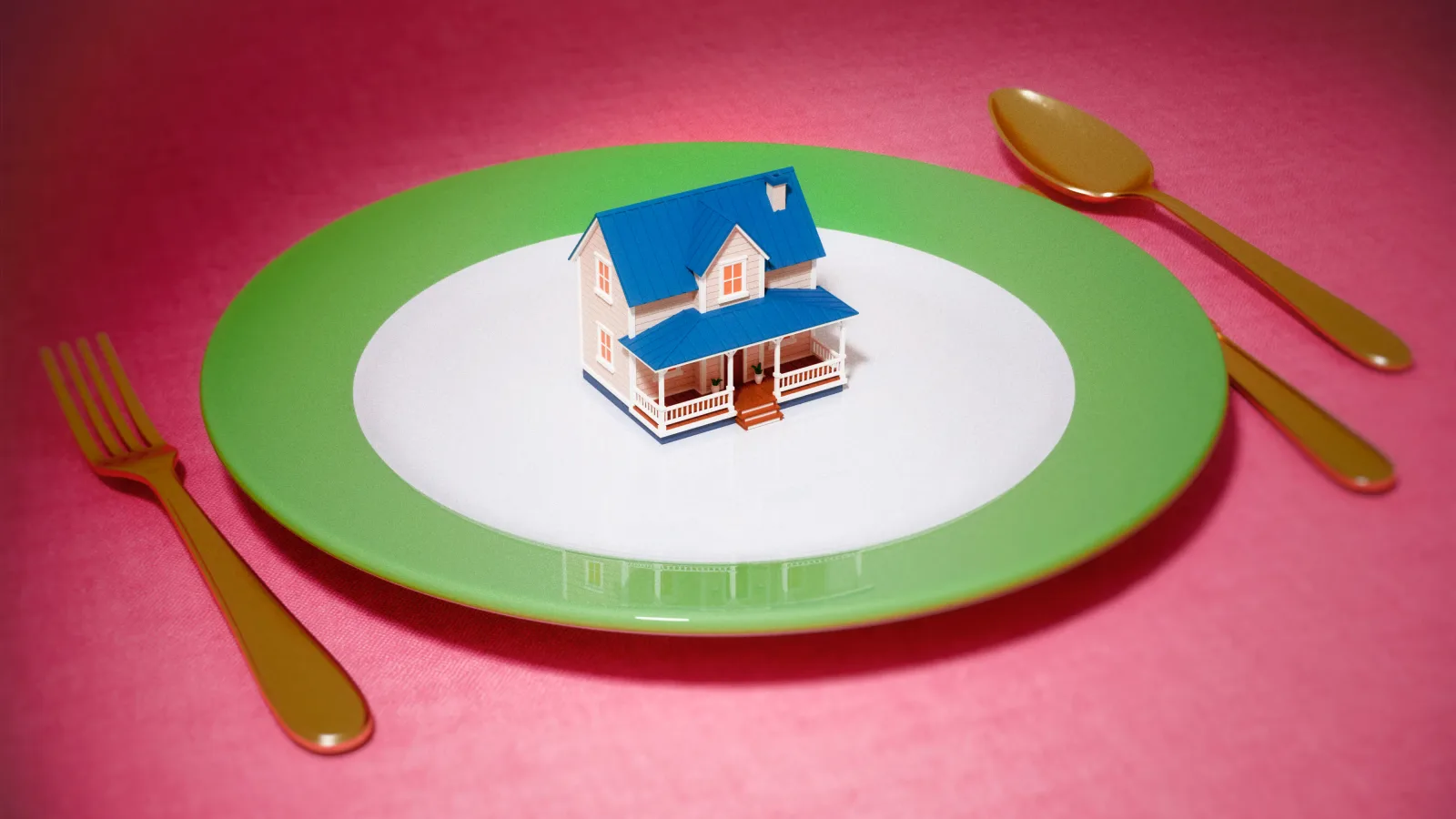

How GLP-1s Are Transforming Domestic Spaces
We have seen how GLP-1 drugs are reshaping bodies. Now they have begun to transform our homes. As GLP-1s reshape American life, they are also sparking a surprising behind-the-scenes transformation of our homes, from med-station bathrooms to ghost-town kitchens. Today, roughly one in eight people in the U.S. are taking a GLP-1 receptor agonist medication to either lose weight or treat a chronic condition, and the adoption rate is only accelerating. Some researchers predict the population of Americans taking the drugs, currently 10 million, could reach upwards of 30 million by 2030. As the drugs whittle waistlines, their impact is rippling beyond the bathroom scale and into a surprisingly wide swath of American life. GLP-1s have been found to provide potential relief for those who have suffered concussions. Dermatologists are using them off-label to combat a variety of skin conditions. Other potential uses include treatment for heart disease, sleep apnea, and Alzheimer's. Then there are the impacts beyond the bodily. A financial firm estimates that the airline industry, foreseeing lighter aircraft loads, will have lower fuel demand. Less discussed, but no less significant, is how the shift is beginning to reshape the American home itself.
Why Are Kitchens Becoming Less Central on GLP-1s?
Many individuals on GLP-1 medications report using their kitchens differently, as targeted food prep zones have become significantly more popular than before. Although we often think of the kitchen as the heart of the home, the kitchen-as-gathering-place is actually a relatively recent invention in architectural history. Prior to the 1960s, kitchens were strictly workspaces tucked into back corners, and before that, they were separate structures due to fire risks. For many GLP-1 drug users, the kitchen is once again evolving as the medication quiets so-called food noise, which is that reflexive, after-work compulsion to raid the snack drawer. This medication may displace the kitchen from its position as the most-visited room in the home, shifting it from a dedicated destination to something more like a pass-through space for nutrient-dense food preparation rather than high-volume cooking.
By quieting so-called food noise, the medication may be displacing the kitchen from its position as the most-visited room in the home. Amanda Kahn, MD, an internist and longevity specialist in New York City, says she now spends far less time there. While she still cooks regular meals and keeps snacks in the house for her eight-year-old, she notes that if that wasn't the case, she wouldn't keep them at all. So, potentially, for child-free couples who both take a GLP-1, the kitchen's role may be shifting from a dedicated destination to something more of a pass-through space.
Of course for many, especially those with children, the kitchen's role as the emotional hearth of the home remains untouchable. But as designers field more requests for focused, wellness-oriented spaces, they are seeing GLP-1 use as a catalyst for a fundamentally different approach to the home layouts. North Carolina designer Elizabeth Valkovics of the design firm Batten Court sees the effect as part of this larger trend toward health-conscious living. She thinks we are going to be moving away from the big, big kitchens. The kitchen may transition to a secondary space rather than the social hub or heart of the home.
How Do GLP-1s Change Bathroom Design and Storage?
For a growing number of GLP-1 users, the bathroom has become a kind of home base for medication adherence and not just for obvious hygiene reasons. It starts with the refrigerator, which is now a staple of most primary bathrooms to store peptides, beauty products, and fertility treatments separately from food. Some houses are twenty thousand square feet, and to have to go to the kitchen to grab a weekly dose every time does not make sense for busy schedules. Then there is the sharps disposal, a detail that would have seemed foreign to many bathroom designers even five years ago. Designers are building syringe storage and disposal into vanity designs with undercabinet pullouts configured to hold unused syringes upright. Keeping medication where you use it also turns out to be good medicine in itself, as patients are much more adherent and consistent when they do not have to trek to the kitchen for their weekly dose.
Keeping medication where you use it also turns out to be good medicine in itself. Kahn has found her patients are so much more adherent and consistent when they do not have to trek to the kitchen for their weekly dose. Gary speaks from experience: I take mine on Sundays, and I am usually in the bathroom thinking, Oh, right—and then I head to the kitchen. But along the way I pass my office, the living room, the dining room. Then it is Tuesday and I have not taken it. Using a tool like Shotlee to track your doses and symptoms can further support this routine by providing a digital reminder and log.
The pharmaceutical renovation of the bathroom is happening alongside a broader transformation. Designers are increasingly fielding requests for freestanding soaking tubs, cold plunges, and infrared saunas built into primary bathrooms, reflecting the common thread: a growing desire to treat the bathroom as a wellness hub. I have found that once people are on the GLPs and losing weight, it often kick-starts a deeper dive into wellness in general, says Rummerfield. Some of the easiest wellness upgrades to make involve the bathroom, where she is incorporating more wellness features than ever. Everybody wants a steam shower now.
Precision tracking for your journey
Join thousands using Shotlee to accurately track GLP-1 medications and side effects.
📱 Get the Shotlee App
Track your GLP-1 medications, peptides, and health metrics on the go with our mobile app!
What Closet Upgrades Do GLP-1 Users Request?
When individuals drop significant weight, closet upgrades often follow as GLP-1 users have been asking for additional storage space as well as more full-length mirrors. Patients on GLP-1 drugs can lose anywhere between fifteen to twenty-five percent of total body weight, and drop clothing sizes within the first year, so the closet reflects the change first. Jenny Albertini, a KonMari-certified professional organizer who takes a GLP-1 herself, declutters and reorganizes wardrobes to put the pieces her clients are most excited to wear front and center. There is a sense that as someone is losing weight and fitting into clothes they have wanted to fit into for a while, that spreads into making sure they feel good in the environment where they are spending their time. Houston-based interior designer Marie Flanigan recently worked with a client who had lost eighty pounds and handed her a guest room to transform into a dream closet for that daily ritual.
Interior designer Tristan Gary needs a bigger closet and a few more mirrors. Two years ago, the Seattle resident started taking the weight loss drug Wegovy. It was part of a season of reinvention for the mom of three, who had recently gone through a divorce. Since then, she has lost 15 pounds and found a whole new appreciation for the act of buying clothes. Gary has maxed out her primary closet as well as the closet in her home office. In need of yet more storage space, she recently took over the bedroom of her eldest son, who is in college.
For Kemble, that meant adding more full-length mirrors to her New York City town house. You could say the decision to mirror most of my bathroom walls was made a little easier given that I was an early adopter of GLP-1s. Given all the health benefits, I assumed I would be less frightened of confronting the future naked me daily. Which brings us back to Tristan Gary, still mulling the details of her dream dressing room. Until she moves, she is making do with her cobbled-together storage spaces. But she has made some improvements to her current closet in the meantime. I looked around and realized I had only one full-length mirror. Now I have mirrors everywhere.
How Does Weight Loss Affect Living and Sleeping Spaces?
Nearly one in three Americans now report occasionally or regularly sleeping apart from their partner to get a better night’s rest, with snoring among the top culprits behind these arrangements. GLP-1s may be softening demand for dedicated snore rooms since Zepbound is FDA-approved specifically to treat obstructive sleep apnea, and GLP-1s have been broadly found to reduce snoring. As bodies lose fat, they lose insulation, and users report feeling colder than they used to, reaching for an extra blanket where they never needed one before. This physical shift often kick-starts a deeper dive into wellness in general, leading people to want to build on the improvements they are seeing. Some of the easiest wellness upgrades to make involve the bathroom, where designers are incorporating more wellness features than ever, such as steam showers and hammams, reflecting a growing desire to treat the bathroom as a wellness hub.
GLP-1s may be softening demand for them. Zepbound is FDA-approved specifically to treat obstructive sleep apnea, but GLP-1s have been broadly found to reduce snoring. Craft, the screenwriter, has experienced this firsthand. Before starting Mounjaro, she used to sleep propped up on what she describes as a crazy pile of multiple pillows in an attempt to quiet her snoring. But after losing weight on the drug, her snoring vanished. Now, she is down to a single pillow. We are cuddling more, and the whole bed is more comfortable for both of us.
A less-expected effect is a new layer for your bed. As bodies lose fat, they lose insulation, and users report feeling colder than they used to. Kemble has found her own fix in an Eight Sleep mattress topper, which, among other features, tracks body temperature and regulates each side of the bed independently. It is pretty amazing because my boyfriend is always hot, and I need about 400 pounds of down comforter to feel cozy. The mattress topper detects the temperature on both sides of the bed and keeps them different.
Summary of Home Zone Changes
| Room | Primary Change | Reason |
|---|---|---|
| Kitchen | Reduced social hub status | Less snacking and lower appetite |
| Bathroom | Medication storage integration | Better adherence and convenience |
| Closet | Expanded storage and mirrors | Weight loss and new wardrobe needs |
| Bedroom | Temperature control focus | Reduced insulation and sleep apnea relief |
Practical Takeaways for Homeowners on GLP-1s
- Reevaluate Kitchen Layouts: Consider smaller appliances and focused prep zones if you are reducing food noise.
- Upgrade Bathroom Storage: Install discreet refrigeration and sharps disposal for medication management.
- Plan Closet Expansion: Expect to need more hanging rods and full-length mirrors as sizes drop.
- Optimize Bedroom Climate: Invest in temperature-regulating bedding to manage insulation loss.
- Track Progress Digitally: Use health tracking apps to monitor adherence alongside your physical changes.
Conclusion
The transformation of the American home is a direct reflection of the changing body. As GLP-1 medications like Ozempic, Wegovy, and Mounjaro continue to reshape our physical health, they are simultaneously reshaping our living environments. From the quieting of the kitchen to the med-station bathroom, these changes are practical adaptations to a new reality of wellness. Whether you are tracking your doses with Shotlee or simply enjoying a new closet, your home is evolving with you.
Frequently Asked Questions
- Do GLP-1s change home design? Yes, users often request smaller kitchens, expanded closets, and bathrooms with medication storage due to lifestyle shifts.
- Why are bathrooms changing on GLP-1s? Bathrooms are becoming home bases for medication adherence, featuring fridges for peptides and sharps disposal bins.
- How does weight loss affect closets? Users often lose 15-25% of body weight, requiring more storage space, hanging rods, and full-length mirrors.
- Do GLP-1s help with sleep apnea? Yes, Zepbound is FDA-approved for sleep apnea, and other GLP-1s have been found to reduce snoring and improve sleep.
- Can I track my GLP-1 progress at home? Yes, tools like Shotlee help users log doses, monitor symptoms, and track adherence alongside their physical changes.