GLP-1 Medications and Addiction
Complete Guide & Evidence (2026)
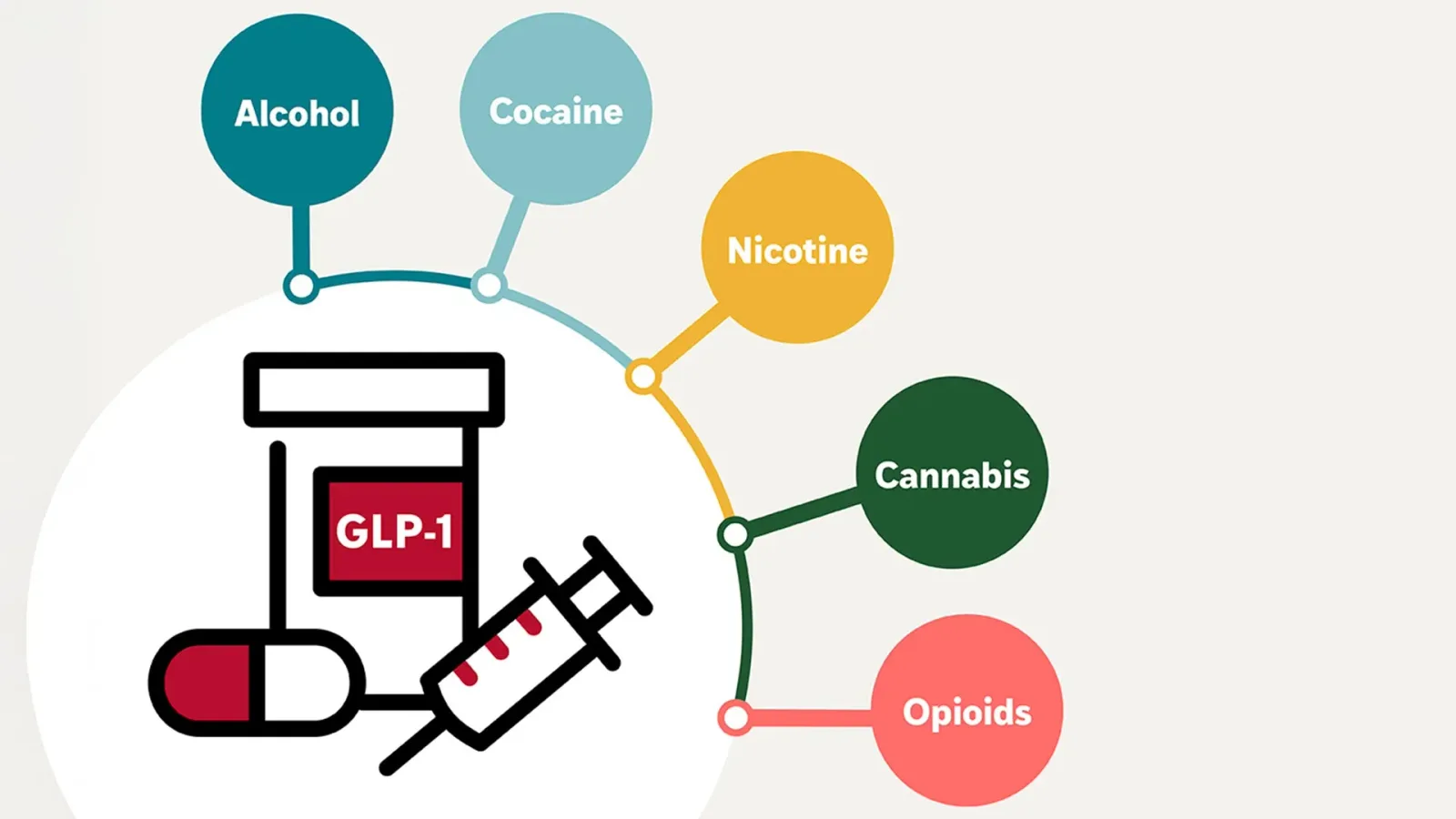
New research shows GLP-1 medications like Ozempic reduce alcohol, gambling, opioid, and nicotine use.
Disclaimer
Important: GLP-1 medications are not currently approved for any addiction indication. The research discussed on this page is preliminary and investigational. GLP-1 therapy should never replace evidence-based addiction treatments such as naltrexone, buprenorphine, methadone, or behavioral therapy programs. If you are struggling with addiction, please speak with a qualified addiction medicine specialist.
The Dopamine Reward Pathway: Why GLP-1s Affect Addiction
Every addiction — whether to alcohol, opioids, nicotine, gambling, or food — operates primarily through the same brain circuit: the mesolimbic dopamine system. This pathway runs from the ventral tegmental area (VTA) in the midbrain to the nucleus accumbens (NAc) in the forebrain, with projections to the prefrontal cortex, amygdala, and hippocampus. When you experience something pleasurable or use an addictive substance, dopamine floods the NAc, reinforcing the behavior through a powerful biological learning mechanism.
GLP-1 receptors are densely expressed in the VTA and NAc — the exact anatomical core of addiction neuroscience. This is not coincidental: the GLP-1 system normally acts as a brake on reward signaling, moderating dopamine release in response to palatable food as part of normal satiety regulation. GLP-1 medications amplify this braking effect, reducing the dopamine spike triggered by food, alcohol, drugs, and gambling.
The cross-substance nature of GLP-1 addiction effects — alcohol, opioids, nicotine, gambling all responding — is expected given that they all flow through this common dopamine highway. What was surprising to researchers is the magnitude of the clinical effect and how quickly it manifests in human patients. Many GLP-1 users prescribed the drug for weight loss discover its addiction-modifying effects before researchers had even designed trials to measure them.
GLP-1 Medications and Alcohol Use Disorder
The strongest clinical evidence for GLP-1 effects on addiction concerns alcohol. A landmark randomized controlled trial published in NEJM Evidence in 2024 enrolled 48 participants with alcohol use disorder (AUD) and randomized them to subcutaneous semaglutide or placebo for 9 weeks, following an initial fasting paradigm. The results were striking: semaglutide reduced the number of heavy drinking days by approximately 40% compared to placebo, and total alcohol consumption per week decreased significantly in the semaglutide group.
Critically, participants reported reduced urge to drink and reduced pleasure experienced when drinking — consistent with the proposed dopamine blunting mechanism rather than a simple aversion or side-effect-mediated reduction. Animal models had predicted this: rats given GLP-1 receptor agonists reliably reduce voluntary alcohol consumption across dozens of independent experiments, with robust replication across multiple labs and countries.
Larger Phase 3 trials of semaglutide specifically for AUD are now underway, including ALCOVA (Alcohol and Cardiovascular Trial) and several NIH-funded investigator trials. These trials will determine efficacy, optimal dosing, and safety in the AUD population specifically — who may have liver disease, nutritional deficiencies, and other comorbidities that the obesity trial populations did not.
The existing approved pharmacotherapy for AUD (naltrexone, acamprosate, disulfiram) is underutilized — fewer than 10% of people with AUD receive medication treatment. If GLP-1 medications prove effective in Phase 3 trials, their dual benefit for obesity and AUD in an overlapping patient population could be transformative for public health.
The Cross-Over Discovery: When Weight Loss Patients Become Sobriety Success Stories
One of the most intriguing patterns in GLP-1 clinical experience is the cross-over effect: patients prescribed these medications specifically for obesity or diabetes who spontaneously report that the reduction in addiction-related behavior is more transformative than the weight loss. This has been documented in published case reports, online communities (particularly Reddit's r/Ozempic forum, which has thousands of posts on this topic), and clinical observations shared by prescribers at major obesity conferences.
Representative patient reports include: "I went from drinking a bottle of wine a night to having zero interest in alcohol after 3 weeks on Ozempic"; "I haven't been to a casino since starting Mounjaro — I thought about going last weekend and just didn't care"; "I quit smoking accidentally — cigarettes started tasting wrong to me and I just stopped buying them." These are uncontrolled anecdotes, but their consistency and volume across millions of users worldwide has accelerated the research agenda.
The cross-over effect also illuminates something important about how addiction and obesity are related: they are not separate moral failures or distinct disease categories — they are overlapping manifestations of dysregulated dopamine reward signaling. Treating the metabolic aspect with GLP-1 therapy may simultaneously address the neurobiological substrate driving compulsive behavior across multiple domains. This unified view of addiction and metabolic disease is reshaping addiction medicine.
Current Clinical Trials (2025-2026)
{trial.trial}: Drug: {trial.drug}
Glp1 And Addiction Protocol Optimization and Best Practices
Optimizing your Glp1 And Addiction protocol involves attention to several evidence-based practices that maximize efficacy while minimizing adverse effects. Consistent timing of administration — taking your dose at the same time each day or week — maintains stable plasma levels and reduces the variability that can exacerbate side effects. For injectable formulations, systematic injection site rotation between abdomen, thigh, and upper arm prevents local tissue reactions and ensures reliable absorption.
Nutritional support plays a synergistic role in Glp1 And Addiction protocol success. Adequate protein intake — typically 1.2 to 1.6 grams per kilogram of body weight per day — preserves lean muscle mass during weight loss and supports metabolic rate maintenance. Resistance training two to three times per week provides an additional lean mass preservation signal. Track your protein intake and exercise alongside your dose and weight data in Shotlee to identify the combination that drives your best outcomes.
Sleep quality and stress management are underappreciated factors in Glp1 And Addiction protocol outcomes. Poor sleep disrupts appetite-regulating hormones, increases cortisol, and impairs insulin sensitivity — all of which can attenuate the benefits of metabolic therapies. Prioritize seven to nine hours of quality sleep per night and implement stress reduction practices such as structured physical activity, mindfulness, or social engagement. Log sleep quality and stress levels in Shotlee alongside your other protocol data to capture these important confounding variables.
Regular communication with your healthcare provider, supported by objective tracking data from Shotlee, enables proactive protocol adjustments rather than reactive problem-solving. Share your Shotlee data at each provider visit to facilitate more efficient and evidence-based clinical consultations. Providers report that patients who bring structured tracking data to appointments receive more personalized and effective care, because the objective data replaces subjective recall with precise longitudinal trends.
Guide FAQs
New research shows GLP-1 medications like Ozempic reduce alcohol, gambling, opioid, and nicotine use.
Yes. Shotlee tracks GLP-1 and peptide doses, side effects, weight, and lab results — free to use.
PubMed, ClinicalTrials.gov, and the FDA website are the most reliable sources for current Glp1 And Addiction research and regulatory updates. Peer-reviewed journals including the New England Journal of Medicine, The Lancet, and JAMA publish the most impactful clinical trial results. This guide is updated regularly to reflect the latest available evidence. Use Shotlee to track your personal protocol outcomes alongside the published research.
Before starting Glp1 And Addiction, establish baseline measurements including body weight, waist circumference, blood pressure, and relevant lab work with your healthcare provider. Download Shotlee and begin logging your baseline metrics at least one week before starting treatment. This pre-treatment data provides the comparison point needed to objectively evaluate your treatment response over time. Additionally, discuss potential side effects and management strategies with your prescriber so you are prepared for the initial adaptation phase.
Evidence-based lifestyle modifications that complement Glp1 And Addiction protocols include: maintaining adequate protein intake (1.2-1.6g per kg body weight per day) to preserve lean mass, performing resistance training two to three times per week, staying well hydrated with at least eight glasses of water daily, prioritizing seven to nine hours of quality sleep, managing stress through regular physical activity or mindfulness practices, and eating smaller more frequent meals during dose titration phases. Track these lifestyle factors alongside your Glp1 And Addiction data in Shotlee to identify which combinations drive your best results.
Track Your GLP-1 Protocol in Shotlee
Free dose logging, side effect tracking, and health metric monitoring for your complete protocol.
📚References & sources
Latest on GLP-1 And Addiction
GLP-1 Weight-Loss Drugs Linked to Lower Risks of Addiction and Overdose
Explore the groundbreaking research linking GLP-1 medications, including Ozempic, Wegovy, Mounjaro, and Zepbound, to a reduced risk of substance use disorders and fewer addiction-related emergencies.
8 min read
Beyond Hunger: GLP-1s Reveal New Insights into Compulsive Behaviors
Originally developed for diabetes, GLP-1 medications are now revealing profound insights into the neurobiology of desire, reward, and compulsion, impacting everything from food cravings to addictive tendencies.
8 min read
Beyond Weight Loss: The Expanding Horizon of GLP-1 Therapies
GLP-1 agonists, famously known for Ozempic and Wegovy, are making waves beyond their initial indications. While weight loss and diabetes management remain key, researchers are uncovering a broader therapeutic potential for these powerful peptide therapies.
8 min read