
CagriSema Guide
Semaglutide + Cagrilintide: REDEFINE Phase 3 Data & Approval Timeline
CagriSema combines semaglutide (a GLP-1 agonist) with cagrilintide (an amylin analogue) into a single weekly injection. The REDEFINE Phase 3 program demonstrated substantial weight loss beyond what either compound achieves alone. This guide covers the mechanism, trial results, dosing, side-effect profile, and expected FDA timeline.
What Is Cagrisema?
CagriSema combines semaglutide, a GLP-1 receptor agonist, with cagrilintide, a long-acting amylin analog that has been studied for obesity. The combination is intended to target appetite and satiety through complementary pathways.
Phase 3 trials reported clinically meaningful weight loss and gastrointestinal adverse events that were mostly transient and mild to moderate. That makes the therapy promising, but also one that needs careful tolerability tracking.
Use Shotlee to log your own protocol data if you are following a comparable research or treatment plan under clinician supervision.
Mechanism Highlights
CagriSema Snapshot
In a 68-week phase 3 trial in adults with overweight or obesity, cagrilintide-semaglutide reduced mean body weight by about 20.4% compared with 3.0% with placebo.
A separate phase 3 study in adults with overweight or obesity and type 2 diabetes also reported clinically relevant weight loss with the combination.
Use the page as a snapshot of the published evidence, not as a substitute for current prescribing information.
Trial Administration
Side Effects
Evidence Timeline
Key Questions
Guide FAQs
CagriSema is an investigational combination of semaglutide and cagrilintide studied for obesity.
Yes. Shotlee supports tracking CagriSema doses, side effects, and health metrics. It is free to use.
Track Your Cagrisema Protocol in Shotlee
Free dose logging, side effect tracking, and health metric monitoring for your complete protocol.
📚References & sources
Latest on Cagrisema
CagriSema Breakthrough: New Dual Therapy Delivers Major Weight Loss in Diabetes Trials
Explore the groundbreaking REIMAGINE trial results for CagriSema, a novel dual-agonist therapy showing superior glycemic control and weight loss in type 2 diabetes patients.
7 min read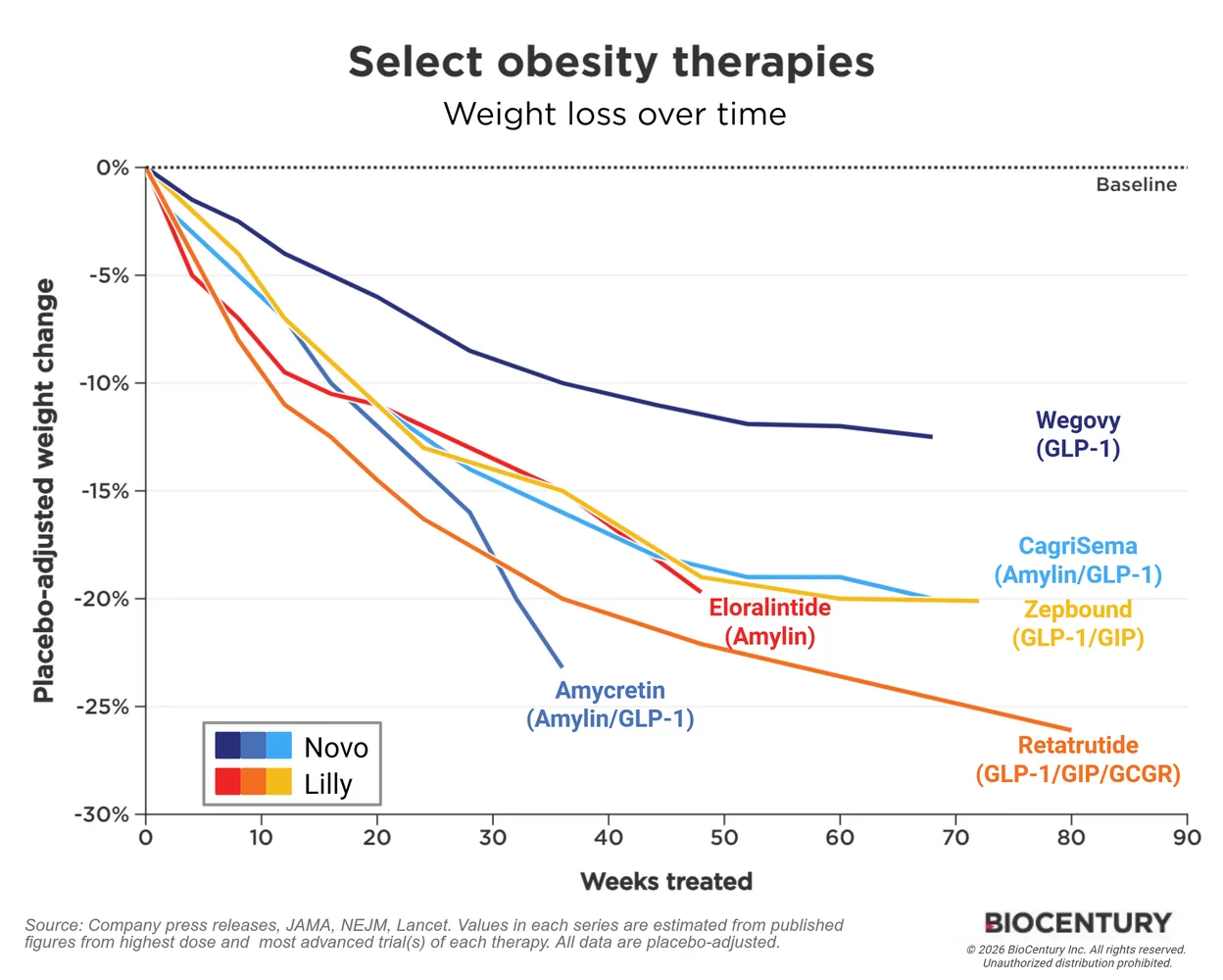
Retatrutide's Triumph: Lilly's Triple Agonist Redefines Weight Loss Potential
Eli Lilly's retatrutide is making waves in the weight loss landscape. This comprehensive look delves into its Phase III results, comparing it to existing treatments and exploring its potential impact on obesity management.
6 min read
Novo's Woes Despite Ozempic's Explosive Growth
Novo Nordisk's Ozempic pioneered the GLP-1 revolution, tripling sales to 309 billion DKK in eight years. Yet shares have cratered 60% due to Eli Lilly's Mounjaro gains, trial disappointments, and looming generics. Discover the booming market's challenges and opportunities.
5 min read