
In the world of Ozempic weight loss and GLP-1 receptor agonists (GLP-1RAs), expectations often clash with reality. Publicly, doctors emphasize measured benefits under regulatory scrutiny, but privately, many confide that patients might rely on these drugs like Ozempic and Wegovy for life. Why? Because a drug alone doesn't transform lifestyle habits—the foundation for lasting weight management and reducing obesity-related comorbidities.
Losing weight is the most effective way to lower risks of heart disease, diabetes, and other issues tied to obesity. Yet, it's daunting: if it took years to gain excess weight through overeating, reversing it calorie-for-calorie can feel endless without the right mindset. GLP-1 medications excel as a kickstart, curbing appetite to enable quick initial losses. The key to success? Maintain an energy balance through metabolism-matched diet and exercise afterward. Revert to old habits—like downing half a pizza or a massive Whole Foods salad—and the weight returns.
The Groundbreaking Study on Ozempic Weight Regain
With GLP-1 drugs now in widespread use, robust data has emerged. A pivotal systematic review and meta-analysis, published in eClinicalMedicine on March 4, 2026, analyzed 48 studies—including 36 randomized controlled trials (RCTs) and six additional clinical trials—involving over 3,200 participants. These trials tracked outcomes up to one year, then modeled longer-term trajectories using nonlinear meta-regression.
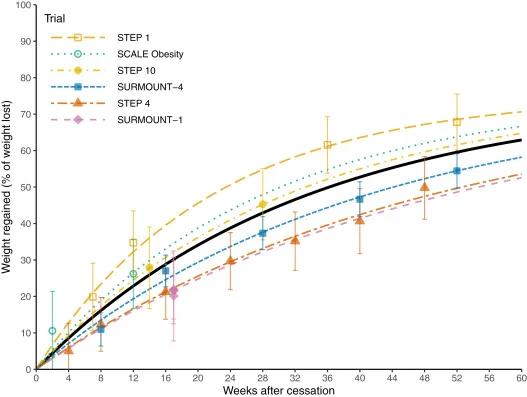
The findings? Upon cessation of GLP-1RAs, weight regain occurs rapidly—up to 60% of lost weight initially—before plateauing at around 75% of the original loss. Fitted trajectories used an exponential recovery function, drawing from key trials:
- Semaglutide (Ozempic/Wegovy) in STEP 1, STEP 4, and STEP 10
- Tirzepatide in SURMOUNT-1 and SURMOUNT-4
- Liraglutide in SCALE Obesity
The black line in their pooled model illustrates this stark pattern. These are population-level statistics from epidemiological modeling, akin to BMI trends or dietary guidelines. Individual results vary—your experience might differ based on adherence and habits.
"Fitted trajectories of weight regain following cessation of glucagon-like peptide 1 receptor agonists (GLP-1RAs), based on clinical trial data. Regression was conducted with an exponential recovery function." – Study visualization description.
Citation: Brajan Budini, Steven Luo, Martin Tam, Isabel Stead, Andrew Lee, Angelica Akrami, Antonio Vidal-Puig, Adrian Park, 'Trajectory of weight regain after cessation of GLP-1 receptor agonists: a systematic review and nonlinear meta-regression', eClinicalMedicine; 4 Mar 2026; www.thelancet.com/journals/eclinm/article/PIIS2589-5370(26)00043-X/fulltext
How GLP-1 Drugs Like Ozempic Work: The Science Behind the Kickstart
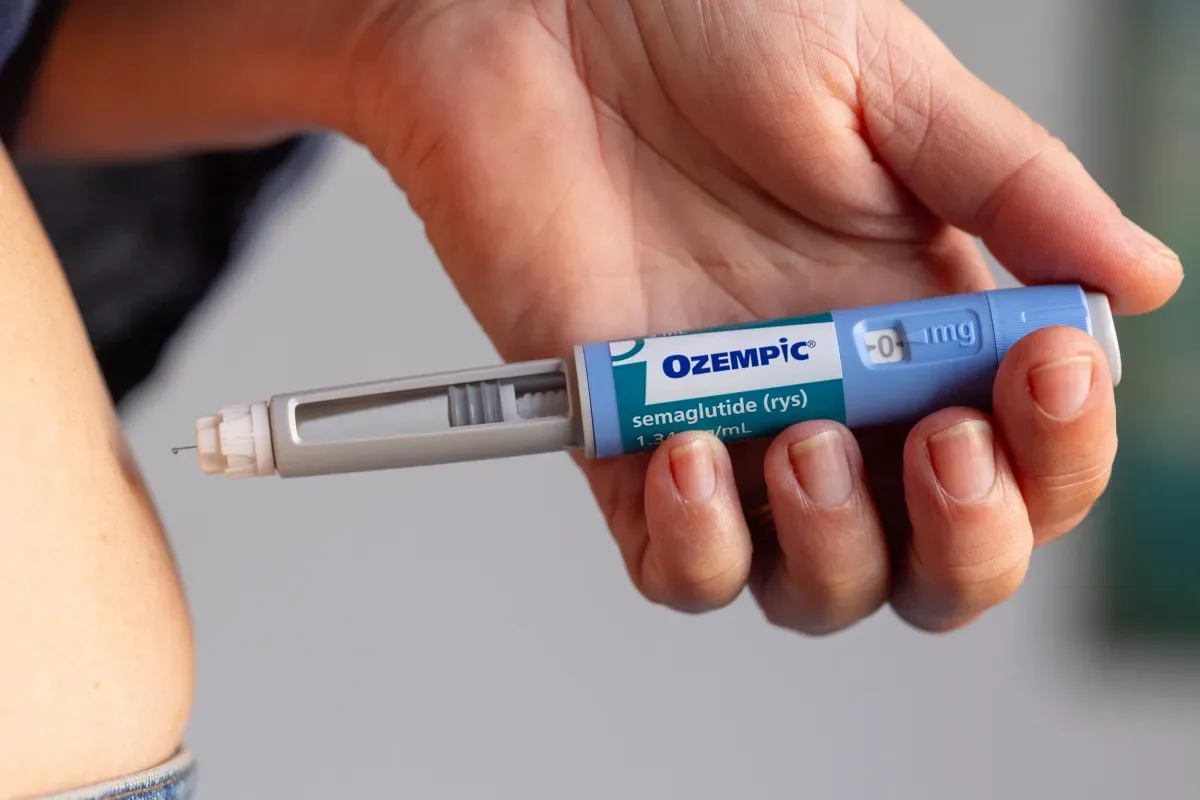
GLP-1RAs mimic glucagon-like peptide-1, a gut hormone that regulates appetite and glucose. Injected weekly (e.g., semaglutide in Ozempic at typical doses of 0.25-2.4 mg), they slow gastric emptying, signal fullness to the brain, and reduce food cravings. This makes overeating unappealing, facilitating 10-20% body weight loss in trials—far beyond diet alone.
But they're not magic: they don't reprogram metabolism permanently or eliminate behavioral triggers. Movie nights paired with Doritos? That psychological link persists unless addressed. The drugs reset appetite hooks temporarily, offering a window to build new habits.
Precision tracking for your journey
Join thousands using Shotlee to accurately track GLP-1 medications and side effects.
📱 Get the Shotlee App
Track your GLP-1 medications, peptides, and health metrics on the go with our mobile app!
Real-World Implications of Weight Regain Data
Consider examples from the study context: A 220-pound man losing 20 pounds might retain just 5 pounds long-term—not worth the cost or effort. Contrast with a 300-pound individual dropping 80 pounds: even regaining 60 leaves 20 pounds off, yielding major health gains like improved blood pressure and insulin sensitivity.
Strategies to Prevent Weight Regain After Stopping Ozempic
To make GLP-1-fueled losses stick, integrate sustainable changes. If your doctor recommends Ozempic or similar, follow their guidance—it's often transformative for those struggling with obesity.
Incorporate Exercise for Lasting Metabolic Boost
Exercise is the best mitigator. Building muscle offsets some scale weight (muscle is denser than fat), but it revs your resting metabolism. Lose 20 pounds of fat, gain 10 pounds of muscle? Net 10-pound loss, yet superior body composition, energy burn, and leeway for occasional pizza—without regain risk.
Aim for resistance training 2-3 times weekly plus cardio. Tools like Shotlee can help track exercise alongside medication schedules and symptoms for personalized insights.
Address Behavioral and Psychological Factors
Weight management is partly behavioral. Use the GLP-1 "reset" to rewire habits: swap snacks for veggies during movies, practice mindful eating. Cognitive behavioral therapy (CBT) or apps reinforce this. Post-drug, maintain calorie balance matching your new metabolism.
Safety Considerations and Comparisons for GLP-1 Therapy
GLP-1RAs like Ozempic are generally safe for approved uses (type 2 diabetes, obesity), but monitor for nausea, GI issues, or rare pancreatitis. Compared to older drugs (e.g., phentermine), they offer superior, sustained loss without stimulants. Tirzepatide (Mounjaro/Zepbound) may edge semaglutide in potency, per SURMOUNT data, but regain patterns are similar.
Discuss with your doctor: Who benefits most? Those with BMI ≥30 or ≥27 with comorbidities. Not for cosmetic use alone.
Key Takeaways: What This Means for Patients on Ozempic
- GLP-1 drugs kickstart rapid weight loss but expect 60% regain if stopped without lifestyle shifts.
- Plateau at 75% of loss per meta-analysis of 48 studies (>3,200 participants).
- Exercise + habit change = muscle gain, higher metabolism, sustainable results.
- Individual outcomes vary; consult doctors for personalized plans.
- Track progress with tools like Shotlee for side effects and adherence.
Conclusion: Actionable Insights for Sustainable Weight Loss
Ozempic and GLP-1RAs are powerful tools—not lifelong crutches if paired with exercise and behavioral tweaks. The eClinicalMedicine study underscores urgency: use the kickstart wisely to sidestep the regain trajectory. Talk to your healthcare provider about integrating these into a holistic metabolic health plan. With the right approach, weight loss can stick for good, slashing comorbidity risks.