
The Shift to Oral Treatments
The thriving GLP-1 sector has relied heavily on weekly injections. By 2026, innovative obesity medications will propel the industry into its upcoming stage.
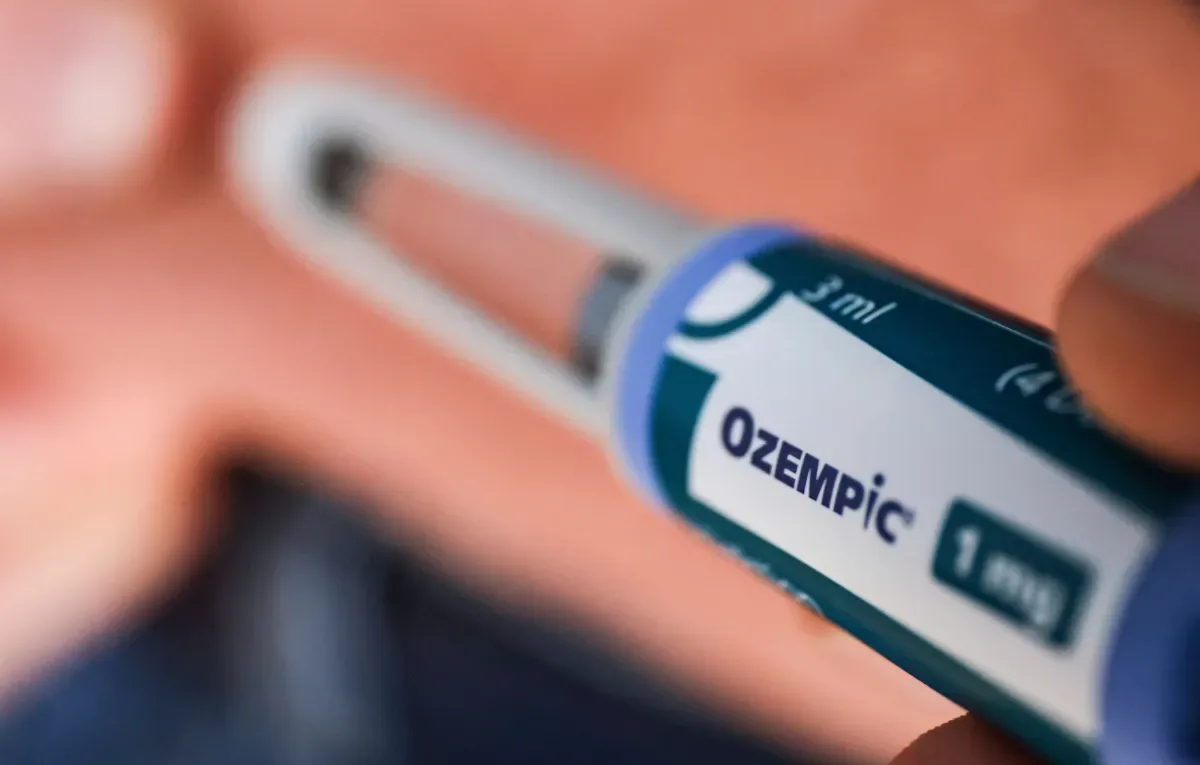
Individuals are now obtaining the initial GLP-1 oral treatment for weight management from Danish pharmaceutical firm Novo Nordisk—a daily medication bearing the identical name to its widely used injectable, Wegovy. An oral GLP-1 from its primary competitor, Eli Lilly, is close to approval in the US, anticipated within a few months.
For certain individuals, oral forms might provide a more practical—and possibly more affordable—choice compared to the current leading injection therapies. The out-of-pocket costs for Novo Nordisk's Wegovy pill vary from $US149 ($222.59) to $US299 monthly, based on dosage, which is somewhat lower than the recently reduced prices for injectables.
Benefits Beyond Weight Reduction
Although the oral medications are not anticipated to yield greater weight loss than weekly injections, according to distinct clinical studies, several healthcare professionals suggest that broadening treatment options could represent a significant advancement for patients.
Oral drugs might draw in fresh participants seeking weight management therapy initially, widening the overall market for weight loss and diabetes medications and possibly increasing revenues for Novo Nordisk and Eli Lilly. These newcomers could encompass needle-averse individuals, along with those who might gain from injectables but do not consider their situation serious enough for weekly administration.
"There are numerous individuals who have yet to experiment with these GLP-1 medications and might be holding out for the oral versions," commented Dr. Eduardo Grunvald, director of the UC San Diego Health Center for Advanced Weight Management.
"For some, it's a preference, and even certain doctors share that view."
"Additionally, if paying directly, oral options will be somewhat cheaper than injections, providing another incentive," he added.
The exact number of current GLP-1 users in the US, particularly for obesity, remains uncertain. However, roughly one in eight adults reported using a GLP-1 medication for weight reduction or managing another long-term condition as of November, per a survey from health policy research group KFF.
Oral Drugs as Emerging Competition
Oral medications are now positioning themselves as the latest arena for rivalry between Novo Nordisk and Eli Lilly, who pioneered the GLP-1 field that certain experts estimate could reach nearly $US100 billion by the 2030s. In August, Goldman Sachs analysts projected that pills might secure approximately 24 percent—or roughly $US22 billion—of the worldwide weight-loss medication market by 2030.
Below is an overview of how obesity pills could alter the landscape.
Expanding the Market Through Orals
Oral treatments may introduce additional individuals to weight management care.
"I think this will significantly broaden the market," stated Novo Nordisk CEO Mike Doustdar to CNBC in late December. "From our personal circles, we recognize many who prefer to avoid injections... for them, a pill alternative is crucial."
Oral medications could encourage some to commence weight management due to perceptions of greater acceptability or ease compared to injections, noted Caroline Apovian, co-director of the Center for Weight Management and Wellness at Brigham and Women's Hospital.
This does not imply a pill suits everyone. Once in the healthcare framework for care, physicians can guide patients through various choices—such as injectables, metabolic procedures, or planned diet and exercise regimens, Dr. Apovian explained.
Dr. Grunvald indicated that adoption of obesity pills will probably stem from general practitioners, who manage most qualifying patients and might prefer prescribing oral medications.
Dr. Grunvald noted that obesity specialists, serving only 5 to 10 percent of eligible individuals, are likely to persist with injections, which demonstrate superior effectiveness to pills in separate trials.
Deborah, a 53-year-old librarian from St. Louis, Missouri, expressed interest in the new Wegovy pill partly for its ease of use. She chose not to share her surname due to stigma concerns linked to GLP-1s.
Deborah mentioned she might try an oral GLP-1 since she's already used to daily pills for other conditions. She highlighted additional advantages, such as simplified travel without refrigeration needs, unlike injectables.
She also showed curiosity in the potentially reduced expenses of pills. Having used weekly Wegovy injections since June, she paid $US449 monthly out-of-pocket before Novo Nordisk decreased it to $US349.
Affordability Factors
Price could influence decisions for numerous patients.
Novo Nordisk's pill features some of the most competitive out-of-pocket pricing, at $US149 monthly for the initial dose and $US299 for the top two doses. Eli Lilly's competing pill is anticipated to offer comparable rates for self-paying users.
Consumers will also gain access to the entry dose of both pills for $US149 monthly via President Donald Trump's direct-to-consumer platform, TrumpRx, following agreements both firms made with his administration in November.
Obesity injectables have historically been difficult to obtain, partly due to inconsistent insurance and list prices around $US1000 monthly. Novo Nordisk and Eli Lilly have addressed this by slashing out-of-pocket costs for injectables to under half.
Eli Lilly announced in December that the highest doses of single-use Zepbound vials would cost $US449 monthly for cash users, while Novo Nordisk in November stated most Wegovy doses would be $US349 in cash.
These figures approach Novo Nordisk's pill costs, which might still seem high for some. Yet, Dr. Grunvald remarked that the about $US150 monthly gap between Zepbound's peak doses and Novo's pill "could make a substantial difference for many" opting to pay directly.
Insured patients for Novo Nordisk's oral treatment might pay as low as $US25 monthly. However, pills are unlikely to improve insurance for GLP-1s for obesity nationwide.
The direct out-of-pocket prices for Novo Nordisk's oral medication are probably "much lower" than amounts employers and intermediaries like pharmacy benefits managers would cover, according to John Crable, senior vice president of Corporate Synergies, a firm specializing in insurance and benefits.
Mr. Crable noted that the ultimate payer costs for the pill remain unclear, as they are not disclosed. But if they match injectable expenses—frequently over $US1000 monthly—employers might hesitate to include it in plans, he added.
Certain organizations already covering obesity injectables could incorporate pills this year. Still, Mr. Crable mentioned some have removed GLP-1 coverage for obesity in 2026 because of elevated expenses.
"I don't anticipate employers enthusiastically adding another high-volume, costly medication to plans when its direct pricing is far cheaper," he stated.
Injectables Remain Dominant
Pharmaceutical companies argue that individuals on injectables can seamlessly transition to oral forms. Eli Lilly released data in December indicating that users originally on Wegovy or Zepbound injections retained most weight loss after switching to the company's pill.
Precision tracking for your journey
Join thousands using Shotlee to accurately track GLP-1 medications and side effects.
📱 Get the Shotlee App
Track your GLP-1 medications, peptides, and health metrics on the go with our mobile app!
However, Dr. Apovian from Brigham and Women's Hospital said cost would be the sole genuine motive to shift stable injection users to pills.
"If prices are comparable, I favor injectables since weight reduction appears superior and adverse effects fewer," she explained.
Dr. Apovian expressed interest in observing real-world performance of pills versus injectables, though separate advanced trials provide insights.
Zepbound demonstrated over 20 percent average weight loss in late-phase research. This exceeds outcomes from Wegovy injectable and pill, plus Eli Lilly's oral drug in independent studies.
In those trials, 7 percent or fewer discontinued due to side effects from Zepbound and Wegovy injectables.
The Wegovy pill had comparable withdrawal rates, whereas roughly 10.3 percent on Eli Lilly's highest-dose oral stopped from adverse reactions.
Leerink Partners analyst David Risinger noted that severely obese individuals needing significant weight reduction will likely prefer injectables, barring needle phobia.
Pills, he added, may mainly draw mildly overweight or obese users seeking moderate losses.
Some current injection users might attempt pills, Mr. Risinger said, though not everyone will deem daily orals more convenient.
Karen Galante, 42, from Horsham, Pennsylvania, uses a compounded semaglutide version—the key component in Wegovy—at a price akin to Novo Nordisk's new pill.
She intends to continue.
"Recalling daily vitamins is challenging enough," she remarked. "I appreciate the simplicity of a weekly injection."
Ample Opportunities for Key Players
Mr. Risinger anticipates both pills from Novo Nordisk and Eli Lilly to "launch rapidly" in 2026.
He observed stronger initial adoption for Wegovy pill, as Eli Lilly's orforglipron may take months to market.
But Mr. Risinger believes Eli Lilly's version will eventually achieve greater revenues due to perceived convenience.
Eli Lilly's orforglipron, a small-molecule treatment, absorbs better and lacks dietary limits like Novo Nordisk's peptide-based pill. Users should consume no more than four ounces of water with Wegovy pill and pause 30 minutes before eating or drinking.
Novo Nordisk's CEO Mr. Doustdar contended those restrictions won't impede adoption. In December, he told CNBC it hasn't affected over a million users of the lower-dose diabetes pill Rybelsus, launched in 2019.
"Just take a sip and proceed; you'll be okay," Mr. Doustdar said. "People rise, swallow with water, and resume routines after 30 minutes."
He described the company's medication as the "most effective pill," noting no developmental products have matched its weight loss in advanced testing.
The top dose of Novo Nordisk's Wegovy pill enabled average 16.6 percent weight reduction at 64 weeks in one late-phase trial. This rivals the injectable version.
No direct comparisons exist between this pill and Eli Lilly's. In one of Eli Lilly's late-phase studies, the highest dose yielded average 12.4 percent body weight loss at 72 weeks.
Despite efficacy differences, Mr. Risinger views both as offering similar weight reduction. Some may not require maximum doses, he added.
In August, Goldman analysts forecasted Eli Lilly's pill capturing 60 percent—or about $US13.6 billion—of the daily oral market segment by 2030. They project Novo Nordisk's oral semaglutide at 21 percent—or around $US4 billion—of that segment. The remaining 19 percent would go to other emerging pills.
Rising Competition
Additional manufacturers are developing oral alternatives, including Pfizer, AstraZeneca, Structure Therapeutics, and Viking Therapeutics.
Mr. Risinger pointed to Structure's daily oral GLP-1, advancing to phase three trials later this year. Structure's stock surged over 100 percent on December 9 after mid-stage results showed aleniglipron aiding obesity patients in losing more than 11 percent weight at 36 weeks, placebo-adjusted.
Further data indicated higher doses could exceed 15 percent loss, outperforming Eli Lilly's top-dose results. However, tolerance was poorer than Eli Lilly's pill.
In a statement, Structure CEO Raymond Stevens called it "potentially top-tier" for small-molecule oral GLP-1.
Mr. Risinger expects this and AstraZeneca's oral GLP-1 to debut by late 2028.
He suggested weekly oral peptides with strong profiles could favor orals further.
He referenced private Verdiva Bio, creating multiple weekly oral peptide therapies. The firm conducts a phase two trial on an oral GLP-1.
Health tracking apps like Shotlee can help monitor progress during such treatments, ensuring users stay on course with weight loss goals.