
Cjc 1295 vs Sermorelin
Which Is Right for You? Complete Comparison (2026)
CJC-1295 vs sermorelin compared: potency, half-life, safety data, availability, and who should choose each GHRH analogue for GH peptide protocols.
Cjc 1295 vs Sermorelin: At a Glance
- ✓Modified GHRH(1-29) analogue — stimulates GH release at the pituitary
- ✓DAC version binds albumin, extending half-life to ~8 days
- ✓Non-DAC (Mod GRF 1-29) has half-life of ~30 minutes
- ✓Produces sustained GH and IGF-1 elevation
- ✓Often stacked with GHRPs (e.g., Ipamorelin) for synergistic effect
- ✓Synthetic GHRH(1-29) — the bioactive fragment of natural GHRH
- ✓Stimulates natural pulsatile GH release from the pituitary
- ✓Previously FDA-approved (Geref) for pediatric GH deficiency
- ✓Does not cause GH desensitization with chronic use
- ✓Half-life approximately 10-20 minutes
Detailed Comparison
| Feature | Cjc 1295 | Sermorelin |
|---|---|---|
| Mechanism | Growth hormone releasing hormone analogue | Growth hormone releasing hormone analogueBest |
| Dosing | DAC: 2 mg/week SC; No-DAC: 100 mcg 2-3x daily | 200-500 mcg SC daily at bedtime |
| Administration | Subcutaneous injection | Subcutaneous injection |
| Half-life | DAC: ~8 days; No-DAC: ~30 min | ~10-20 minutes |
| FDA Status | Not FDA-approved — research peptide | Previously FDA-approved (discontinued commercially) |
| Key Trial | Teichman SL et al. JCEM 2006 — sustained GH/IGF-1 elevation | Prakash A et al. BioDrugs 1999 — clinical review |
| Side Effects | Flushing, headache, injection site reactions, water retention | Injection site reactions, flushing, headache — generally well-tolerated |
Which Should You Choose?
CJC-1295 (with or without DAC) (growth hormone releasing hormone analogue) and Sermorelin (GRF 1-29) (growth hormone releasing hormone analogue) serve different clinical roles despite both being in the GHRH analogue space. CJC-1295 (with or without DAC) modified ghrh(1-29) analogue that stimulates pituitary gh secretion with extended half-life via drug affinity complex (dac) binding to albumin. Sermorelin (GRF 1-29) synthetic 29-amino-acid analogue of natural ghrh that stimulates physiological gh release from the pituitary.
Whichever you choose, track your protocol in Shotlee to build clean data for dose optimization and outcomes comparison.
Making an Informed Choice Between Cjc 1295 and Sermorelin
Choosing between Cjc 1295 and Sermorelin depends on multiple individual factors including your specific health goals, tolerance profile, insurance coverage, and prescriber recommendation. While clinical trial data provides population-level efficacy and safety comparisons, your personal response may differ based on genetics, baseline health, concurrent conditions, and lifestyle factors. Use this comparison as a starting framework and discuss the specifics with your healthcare provider.
Head-to-head clinical trial data between Cjc 1295 and Sermorelin is the gold standard for comparison, but such direct comparisons are not always available for every pair of compounds. Where head-to-head data is lacking, cross-trial comparisons provide useful but imperfect approximations — differences in patient populations, trial design, and endpoint definitions mean that numbers from separate trials are not directly interchangeable. Keep this context in mind when evaluating the comparison data presented here.
Tracking your personal response data in Shotlee is particularly valuable when switching between medications or considering a change. By documenting your outcomes on your current protocol — including efficacy metrics, side effect profile, adherence rate, and quality of life measures — you create an objective baseline for comparison if you transition to the alternative compound. This data transforms a subjective switching decision into an evidence-based protocol optimization.
Cjc 1295 vs Sermorelin: Frequently Asked Questions
CJC-1295 (with or without DAC) is a growth hormone releasing hormone analogue while Sermorelin (GRF 1-29) is a growth hormone releasing hormone analogue. They differ in mechanism, dosing, and clinical evidence. Your choice should depend on your specific goals and medical history.
Switching should be done under medical supervision. Your prescriber can advise on transition protocols. Track both in Shotlee for comparison data.
CJC-1295 (with or without DAC) works as a growth hormone releasing hormone analogue (DAC: 2 mg/week SC; No-DAC: 100 mcg 2-3x daily), while Sermorelin (GRF 1-29) is a growth hormone releasing hormone analogue (200-500 mcg SC daily at bedtime). They have different half-lives (DAC: ~8 days; No-DAC: ~30 min vs ~10-20 minutes), side effect profiles, and levels of clinical evidence.
Yes. Shotlee supports tracking any medication or peptide. You can compare your results across different protocols.
Neither is universally better — the right choice depends on your individual health profile, treatment goals, side effect tolerance, insurance coverage, and prescriber recommendation. Clinical trial data shows efficacy differences in specific populations, but personal response varies. Track your experience with either medication in Shotlee to generate objective comparison data with your healthcare provider.
Switching between these medications should be done under medical supervision. Your prescriber will consider factors including your current response, reason for switching, dose equivalence, and transition timing. Use Shotlee to document your outcomes on the current medication so you have a clear baseline for comparison after switching.
Track Cjc 1295 or Sermorelin in Shotlee
Free dose tracking, side effect logging, and outcome comparison for any medication protocol.
📚References & sources
Latest on Cjc 1295

Peptides for Athletes: Separating Hype from Scientific Reality
Athletes are increasingly curious about peptides for performance enhancement and recovery. This article delves into the scientific literature to separate the hype from the reality, examining the evidence for popular peptides and their potential risks.
8 min read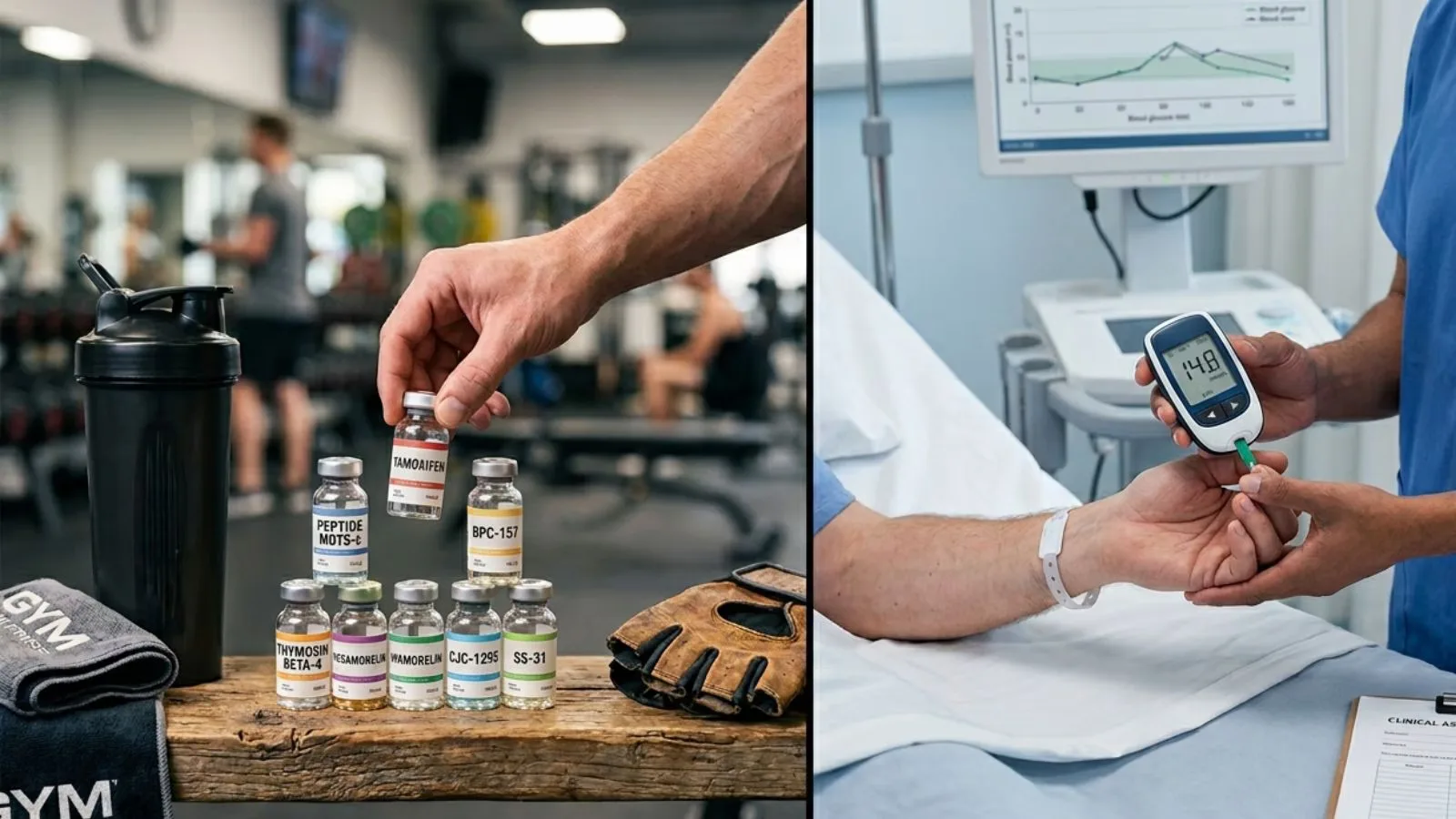
'Gym Peptides Gave Me Diabetes': Actor's Story Reveals Dark Side
A disciplined 35-year-old film actor walked into a Mumbai clinic with Type 2 diabetes after two years of unregulated peptide injections for a muscular physique. Recommended by his gym trainer, drugs like MOTS-c and tamoxifen wreaked havoc, causing insulin resistance. Experts reveal the growing misuse in fitness circles and how to spot the risks.
6 min read
Inside the Grey Market Peptide Boom: 'I'm Not Comfortable with Myself'
Dale, a 38-year-old former army HGV driver, shed pounds on Mounjaro but turned to grey market peptides when prices soared. Inside Discord groups buzzing with rave reviews, he bought unlicensed BPC157 and CJC-1295 with Ipamorelin. This glimpse reveals the booming, risky world of grey market peptide sourcing for weight loss.
5 min read