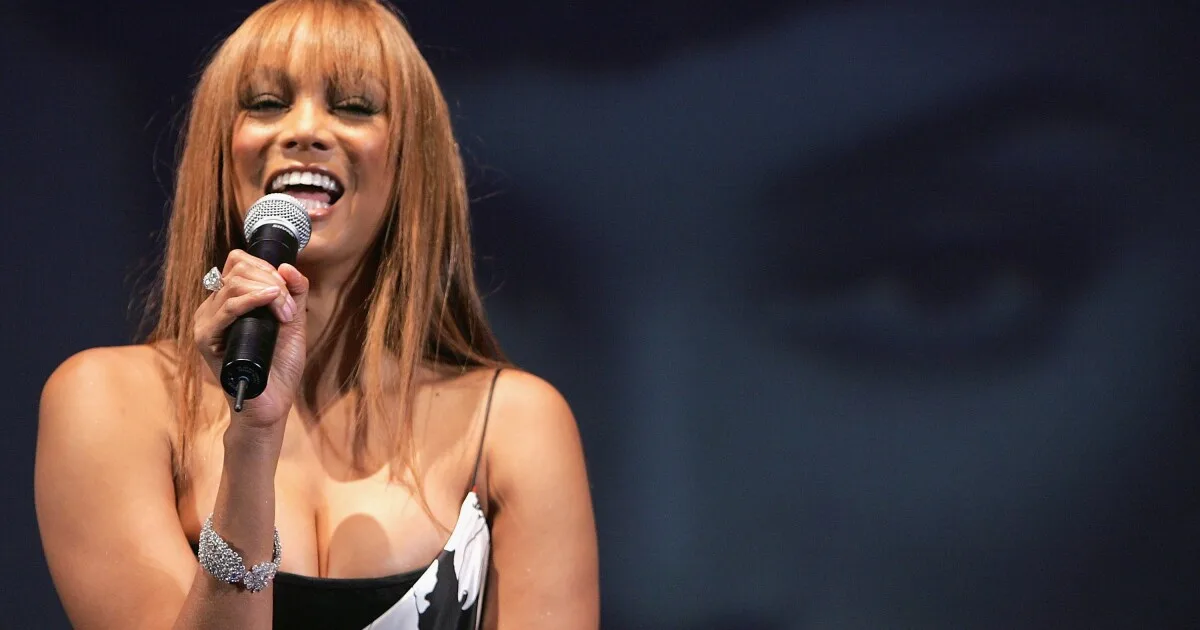

In the era of accountability documentaries, Netflix's Reality Check: Inside America's Next Top Model delivers a unflinching examination of Tyra Banks' iconic reality series. Give Banks credit: she's acknowledged past criticisms, tweeting in 2020 about "really off choices" like body shaming and unethical practices, sending "love and virtual hugs." This three-part series amplifies those voices, allowing former contestants, judges, and Banks herself to recount experiences from triumphant to traumatic.
The Rise of Accountability Documentaries
Documentaries like those on Britney Spears and Abercrombie & Fitch have set the stage for dissecting pop culture icons. America's Next Top Model (ANTM), once a reality TV juggernaut, was ripe for this treatment. Directed by Mor Loushy and Daniel Sivan, Reality Check surprisingly features candid interviews without Banks as a credited producer, lending authenticity and balance.
From Small Transgressions to Major Revelations
The series builds from minor issues to shocking accounts. Shandi Sullivan from Cycle 2 recounts blacking out after drinking, waking up with a male model, and producers filming without intervention—framed as "The Girl Who Cheated." Keenyah Hill (Cycle 4) spoke up about a male model's inappropriate photoshoot behavior but was dismissed by producers, including Banks. Giselle Samson (Cycle 1) overheard judges calling her "got a wide ass." Dani Evans, Cycle 6 winner, was pressured by Banks in 2006 to close her tooth gap, only for Banks to later encourage a white contestant to widen theirs.
- Key Contestant Testimonies:
- Shandi Sullivan: Producer inaction during blackout incident.
- Keenyah Hill: Dismissed harassment claim.
- Giselle Samson: Body shaming by judges.
- Dani Evans: Contradictory pressure on dental gap.
Judges' Blunt Insights into Behind-the-Scenes Chaos
Judges J. Alexander, Jay Manuel, and Nigel Barker—ANTM breakout stars who later fell out with Banks—provide damning details on manipulated production. Their roles as consultants add sympathy and depth, highlighting ethically dubious choices they also made.
"I wanted to show beauty is not one thing, and I wanted to fight against the fashion industry," Banks says of casting diverse women beyond "tall, stick-skinny and white."
Yet, Banks prioritized "good TV," often clashing with her ethos. Archival footage shows her telling Hill, "I would love to change the rules, but until that happens... You can eat a burger, and take the bread off."
Tyra Banks: Contradictions at the Center
Banks embodies contradictions, aspiring to Oprah-like influence after facing racism and body discrimination. She positioned ANTM as rebellion against high fashion gatekeeping. But practice diverged: hiding behind "industry standards" under "tough love."
Reflecting on yelling at Tiffany Richardson in 2005—"We were rooting for you!"—Banks insists, "I just wanted to change this woman's life." The series contrasts her apologies with critics' views, giving space to hardened perspectives.
Precision tracking for your journey
Join thousands using Shotlee to accurately track GLP-1 medications and side effects.
📱 Get the Shotlee App
Track your GLP-1 medications, peptides, and health metrics on the go with our mobile app!
Banks' Ongoing Self-Perception
Banks clings to her disruptor image. Notably, she teases "You have no idea what we have planned for Cycle 25," tying accountability to self-promotion.
A Product of Its Time? Reality TV's Wild West
ANTM launched in 2003 amid unchecked reality TV. As an impressionable viewer, the show's "inclusive" mantra stood out against normalized eating disorders and limited diversity. Whitney Lee Thompson Forrester (Cycle 10 plus-size winner) credits it for opportunity; others were shamed at 124 pounds.
Progress Isn't Linear
One show couldn't undo gatekeeping. The series underscores non-linear progress: body positivity caveats persist. As attitudes shift, ANTM foreshadowed blowback—implicitly tying to today's landscape where the body positive movement recedes with GLP-1 drug proliferation. Thin ideals endure.
Banks could have fought harder for Evans' gap or others, but the pendulum swings back before advancing.
Key Takeaways from Reality Check
- Candid Voices: Models and judges expose body shaming, assault mishandling, and production ethics.
- Banks' Role: Partial accountability amid self-promotion and contradictions.
- Cultural Reflection: Reality TV's evolution, diversity limits, and body image pendulum.
- What It Means for Viewers: Rethink icons; demand better from entertainment.
Why Watch Reality Check Now?
Streaming revival of ANTM coincides with cultural reckonings. The docuseries balances praise (inclusivity gains) with critique (trauma inflicted), urging reflection on media's influence on body standards. Compare to modern shows: has reality TV truly evolved?
Conclusion: Actionable Insights on Pop Culture Accountability
Reality Check doesn't absolve Banks but illuminates ANTM's legacy. Viewers gain understanding of reality TV machinations, the cost of fame-seeking, and stalled progress in inclusivity. Stream it on Netflix to form your own view—progress demands scrutiny.