
Rumors of Ozempic Use Surround Tucker Carlson Amid Rising Popularity of Weight-Loss Medications Among Celebrities and Everyday Americans
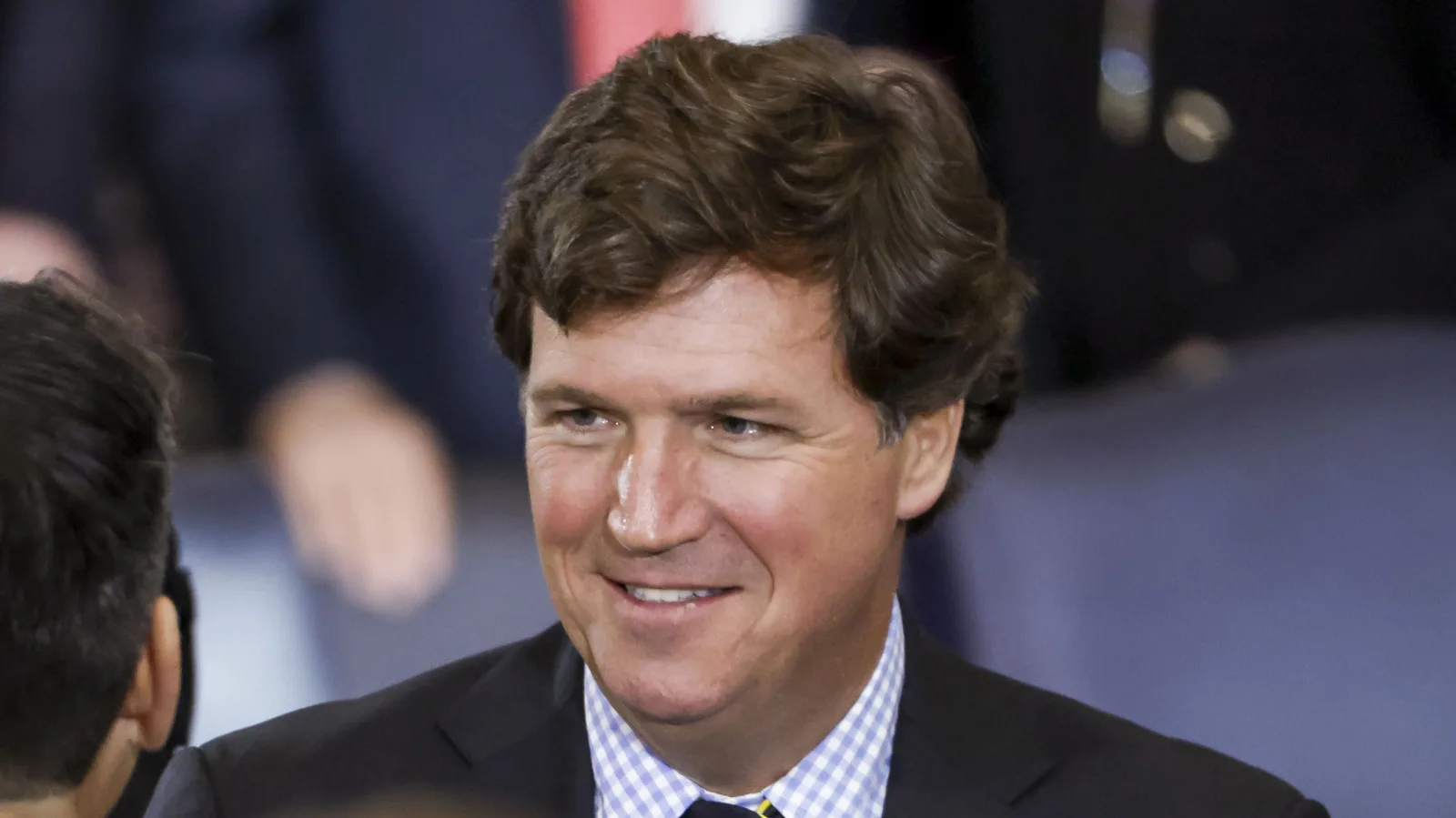
The controversial podcaster Tucker Carlson has triggered intense online worry after a recent photo revealed his 56-year-old self appearing markedly changed and frail, sparking broad speculation about reliance on weight-loss drugs.
The picture, posted on X by Florida Republican gubernatorial hopeful James Fishback, depicts Carlson with distinctly hollowed-out facial traits, causing both admirers and detractors to speculate if he has joined the ranks of notable individuals opting for GLP-1 treatments such as Ozempic or Wegovy.
This bodily shift has unleashed a wave of frank responses on social platforms, where viewers observe that the typically vigorous media figure now seems parched and prematurely aged.
Although Carlson has yet to comment publicly on the buzz, the circumstances align with his repositioning as a 'nicotine pouch entrepreneur' and a key player in the 'Make America Healthy Again' initiative, which pushes for a significant overhaul in U.S. wellness practices and drug disclosure.
Reactions on various social networks arrived quickly and openly. 'Advise Tucker to stop using Ozempic,' penned one user, while another directly inquired, 'Is Tucker dying?' The fervor of the remarks blended real worry with intrigue, as people pointed out his increasingly emaciated look and perceived rapid aging.
Numerous commentators spotlighted indicators linked to GLP-1 drug effects, such as sunken cheeks and pale skin commonly tied to swift weight reduction. 'Dude... Ozempic Tucker? Appearing parched,' joked one, and another pressed, 'Why does Tucker seem 80 here?' Queries flooded social feeds, with confused individuals muttering, 'What happened to Tucker, man?'
The chatter about Carlson unfolds during a wider societal trend where weight-loss pharmaceuticals are becoming commonplace. It highlights how apparent physical alterations now instantly raise queries about possible medical involvement, mirroring the drugs' ubiquity and the close examination of famous people's looks.
Precision tracking for your journey
Join thousands using Shotlee to accurately track GLP-1 medications and side effects.
📱 Get the Shotlee App
Track your GLP-1 medications, peptides, and health metrics on the go with our mobile app!
The suspicions regarding Carlson follow closely after a notable statement from Donald Trump, who openly stated he might consider weight-loss pills despite often claiming optimal well-being. On January 7th, the 79-year-old former President responded to journalists' health inquiries by affirming he 'ought to' experiment with a GLP-1 option like Wegovy or Ozempic for shedding pounds.
Trump's straightforward comments followed shortly after The Wall Street Journal's exposé detailing his problematic dietary patterns. The outlet cited a resurfaced October 2025 podcast chat where Republican National Committee Chair Joe Gruters expressed amazement at the President's massive fast-food intake, recalling a time when Trump awaited 'hot fries from McDonald's, followed by a Filet-O-Fish, Quarter Pounder, and Big Mac.'
Trump's long-standing preference for McDonald's has frequently made headlines and inspired satire. He famously had the chain deliver food to his courthouse during the October 2023 fraud case, and once more in March 2025 before his State of the Union speech, receiving a huge shipment of burgers, nuggets, and fries. These events reinforced his image for dietary habits that clash sharply with the fit personas many global leaders cultivate.
The President's readiness to accept potential perks of weight-loss drugs marks a significant societal evolution. In November 2025, Trump revealed that Medicare and Medicaid 'will at last reimburse for weight-loss medications for countless obesity patients,' a move emphasizing the widespread embrace of these therapies in modern U.S. culture.
Weight-loss treatments have long been prevalent in Hollywood, with stars like Serena Williams and Amanda Bynes publicly adopting them for their health routines.
The shift from a Hollywood exclusive to a Medicare-supported therapy illustrates a compelling change in public attitudes toward medical aids for managing body weight, prompting debates on availability, beauty standards, and the routine use of clinical methods for aesthetic goals.
Regardless of whether Carlson truly employed these substances, the fervor of the rumors illustrates how evident transformations in celebrities instantly provoke suspicions of drug aid—a scenario unimaginable only recently.