
Weight Perceptions Among Americans
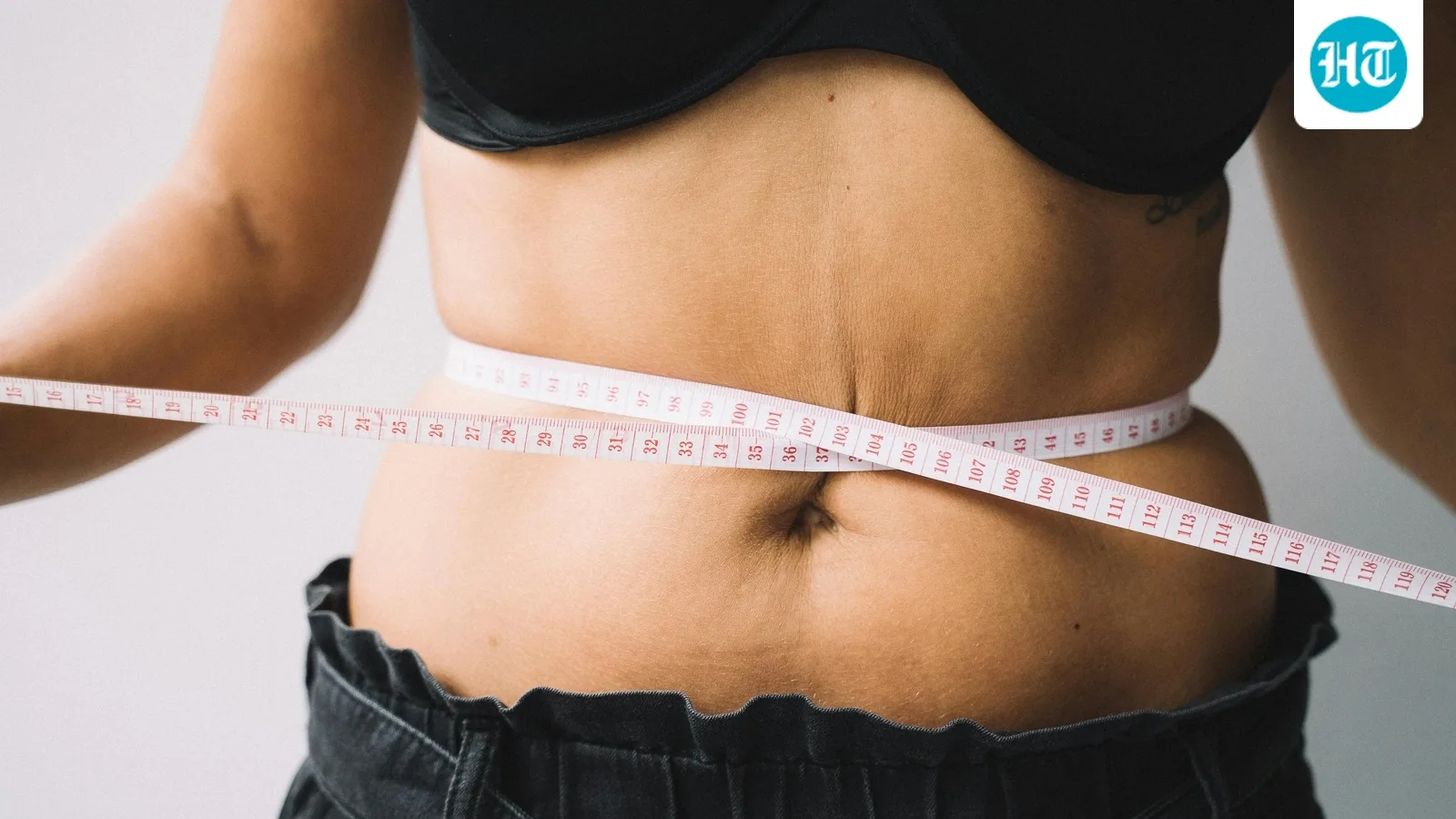
As the year transitions and people contemplate fresh starts, 41% consider themselves at least partially heavier than ideal, with 52% indicating they'd like to reduce their body mass. Yet, merely 26% are truly working toward that goal. Females remain more prone than males to identify as overweight and express interest in slimming down.
These insights, derived from the West Health-Gallup Health and Healthcare Survey between November 3 and 25, align closely with patterns observed in recent years across all adults, women, and men.
Gallup has monitored how Americans describe their body weight since 1999, inquiring whether they view it as extremely overweight, somewhat overweight, just right, somewhat underweight, or extremely underweight. The biggest group, ranging from 48% to 60%, has regularly stated their weight feels appropriate, while 34% to 44% have indicated being overweight, and merely 4% to 8% have reported being underweight.
The most recent West Health-Gallup poll indicates 50% of Americans believe their weight is ideal, 41% as very or somewhat overweight, and 8% as very or somewhat underweight. This represents the eighth straight measurement with no less than 40% of U.S. adults labeling themselves as overweight, succeeding an eight-year stretch with figures under 40%.
Across the data, women have been more inclined than men to describe themselves as overweight, featuring a six-point disparity in the present poll, with women at 43% and men at 37%.
Beyond the ongoing gender divide, notable and steady variations exist by age group. At present, 30% of individuals aged 18 to 34 view themselves as overweight, in contrast to 44% of those aged 35 to 54 and 45% of adults 55 and above. All these percentages match the averages from the last 25 years.
Self-Reported Body Weights and Ideals
The survey also records self-reported body masses. For all U.S. adults, the five-year mean stands at 181 pounds, comprising 163 pounds for women and 198 pounds for men. These numbers reflect rises since 1990 of 20 pounds overall, 21 pounds for females, and 18 pounds for males.
Gallup observes that alongside weight gains, people have shifted their visions of perfect body weight, with goals now averaging about 15 pounds heavier than in 1990. The mean desired weight from 2021 to 2025 data is 165 pounds total, including 144 pounds for women and 185 pounds for men. Back in 1990, those averages were 149 pounds for everyone, 129 for women, and 171 for men.
Precision tracking for your journey
Join thousands using Shotlee to accurately track GLP-1 medications and side effects.
📱 Get the Shotlee App
Track your GLP-1 medications, peptides, and health metrics on the go with our mobile app!
Desires and Efforts to Change Weight
A slender majority of U.S. adults, 52%, now express wanting to slim down. Meanwhile, 37% are satisfied with keeping their current weight, and 10% wish to add pounds.
These figures have stayed relatively stable from 1996 onward, when consistent monitoring started. Initial data from 1951 to 1957 differed markedly, with most people okay staying at their existing weight.
Women have traditionally surpassed men in wanting to lose weight. Currently, 58% of women desire this compared to 46% of men, nearly matching the 15-point difference since 1951.
Despite 52% of Americans voicing a wish to drop weight, only half that number (26%) report earnestly attempting it. This breaks down to 30% of women and 22% of men. These values track the long-term averages since 1996.
The present disparity between aspiration and action is marginally wider for women (58% versus 30%, a 28-point gap) than for men (46% versus 22%, a 24-point gap).
Trends and Gender Gaps
Even with the growing popularity of GLP-1 medications tied to a significant decline in obesity rates in America, a constant four in 10 Americans still see themselves as at least somewhat overweight, and over half express wanting to lose weight. Still, just half of those desiring change are actively striving for it.
A gender divide endures, where women are likelier than men to see themselves as overweight and to wish for reduction. Health tracking apps like Shotlee can help monitor progress toward weight loss goals.