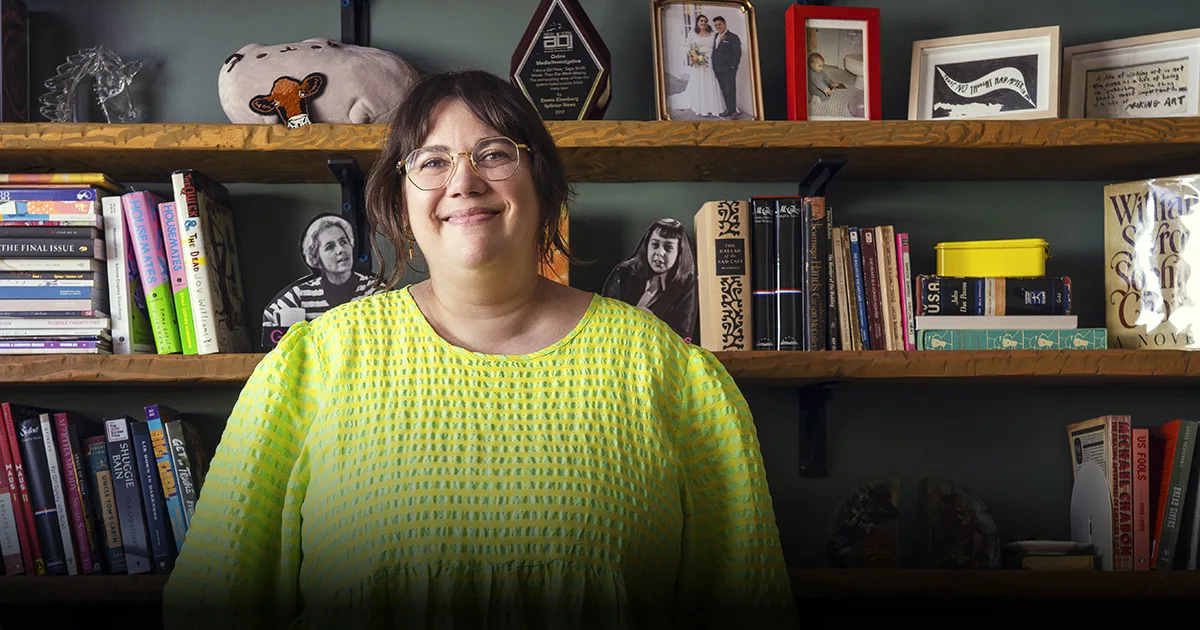
Emma Copley Eisenberg, whose byline has graced The New York Times, Esquire, McSweeney's, and Philly Mag, continues to captivate readers with her intimate portrayals of community, identity, and the body. Her 2024 novel Housemates, inspired by West Philly life, was a standout success. Now, with the April 28th release of Fat Swim—a collection of short stories deeply rooted in Philadelphia—she delves into fat liberationism, personal evolution, and the quirks of city living. In this in-depth interview, Eisenberg opens up about her writing origins, neighborhood shifts, and why terms like "curvy" grate on her. Emma Copley Eisenberg fat liberationism emerges as a central theme, challenging dominant narratives around body size.
Early Influences: From Cricket Magazine to Professional Writing
Eisenberg's path to authorship began young. Named after socialist activist Emma Goldman—who notably ran an ice cream store—Eisenberg grew up in a bookish family. Her mother was a children's librarian, and her father organized labor for Broadway actors.
"I was very, very young. Do you remember the magazine called Cricket? ... My parents got me Cricket. I entered its little literary contest when I was seven and won. It was the best thing that ever happened, and I realized, Wow, I can communicate to people through my writing. That was the coolest feeling."
This early validation set the stage. After growing up on Martha's Vineyard "before it got fancy" and in New York City's Chelsea, she arrived in Philadelphia in 2005 for Haverford College, graduating in 2009. A stint in West Virginia followed before settling into a West Philly group house in 2011.
West Philly Group Houses: A Hub of Art, Queers, and Community
West Philly's vibrant, diverse scene drew Eisenberg in. "I didn't have a clue what I was doing. ... It was filled with artists and queers. It felt very alive. Truly diverse."
What Makes a West Philly Group House Unique?
These communal living setups foster deep connections. "You are living with a bunch of other people in a very communal way. It felt very warm—it was like a family that you came home to at the end of the day. I felt much less alone, and that was good because this was a very alone period in my life."
During this time, she contributed to Philadelphia Weekly—fact-checking and arts writing amid coverage of race and sexual assault—and The Philadelphia Citizen. "I miss Philly's alt-weekly days." Her novel Housemates captures this world, evoking nostalgia for those quirky communities.
Fat Swim: Philly Stories, Old and New
Fat Swim, out April 28th, marks a full-circle moment—its oldest stories date back over a decade, predating her debut The Third Rainbow Girl (2020 nonfiction) and Housemates. All fiction, most stories unfold in Philly, with interconnected characters; outliers include Jersey Shore and rural central Pennsylvania settings.
Key Stories and Inspirations
- "Ray's Happy Birthday Bar" (oldest): Inspired by South Philly's real bar. Features a white working-class woman grappling with sexuality, friendships, parenthood choices, and past decisions.
- "Camp Sensation" (newest): A magical realist tale of a central Pennsylvania camp for mending body relationships. "What if there was a camp in the woods ... where they could help you understand what a body is and how to love it?"
Eisenberg draws from life "whether I've lived [it] or not." Fiction weaves "little pieces from everywhere, bits of other people, things we imagine, things we watch on TV, and we make this nest."
Navigating Body Image: Rejecting Linear "Journeys"
Eisenberg's relationship with her body evolves constantly. Approaching 40, she focuses on maintenance: "I'm trying to make sure my body doesn't collapse." She rejects singular narratives.
Precision tracking for your journey
Join thousands using Shotlee to accurately track GLP-1 medications and side effects.
📱 Get the Shotlee App
Track your GLP-1 medications, peptides, and health metrics on the go with our mobile app!
"My thinking and my sensations and my feelings about my body ... have changed so much and continue to change every day, so there is no one quote-unquote journey. I think the idea that there could be one journey is something that troubles me a lot."
The Fat Liberation Movement: A Brief Context
Fat liberationism, founded in the 1960s alongside civil rights and disability justice, advocates body autonomy and rights for fat people without requiring change. It counters dehumanizing portrayals, demanding workplace protections, comfort in travel, and respect. Eisenberg embraces this publicly: "Yes, I definitely believe in the ideology of fat liberation. Which, again, to me just means body autonomy and basic rights and respect." Her books remain apolitical, focusing on emotional truths.
She critiques limited story shapes, like weight loss "before-and-after" photos: fat bodies pale and ugly, thin ones vibrant and fulfilled.
Cultural Backlash: Ozempic, Serena Williams, and Fat Shaming
Recent inclusivity in ads has reversed amid GLP-1 hype like Ozempic. Eisenberg laments: "Any kind of public joy over the existence of fat people is met with slapping us on the wrist and saying, Just go away. You're gross. You're disgusting."
Ads, Mike Tyson's "real foods" Super Bowl spot, and Serena Williams promoting GLP-1 programs—tied to her husband's investment—fuel meanness. "People are just ... mean. Like it's junior high all over again." She anticipates online backlash: "She's advancing this idea that is unhealthy and disgusting." Yet, seeing fat people live without self-hate provokes intense reactions.
Practical Guidance for Readers: If exploring body narratives, discuss fat liberation principles with trusted communities. Tools like symptom trackers can help monitor physical sensations without judgment, supporting autonomy.
A New Chapter: From West Philly to South Philly
In 2025, Eisenberg married Art (Chinese-Viet American) and relocated south for soup spots like Café Nhan's pho tai, spongy meatballs, and brisket. South Philly offers walkable dining, package protection culture, and home cooking—gluten-forward for her, hot pot for Art.
They met on Tinder (her seeking NYC matches), endured long-distance, and bonded over pandemic doughnuts and Tiger King. She still visits West Philly for friends, Clark Park queer acrobatics, and restaurants.
Quick-Fire Insights: Playlists, Powerball Dreams, and More
- TikTok: Deleted for fascism; once great for nail art.
- Friday nights: High, comedy specials, guacamole.
- $10M Powerball: Socialist ice cream shop/bookstore, fix Philly library ACs.
- Piss her off: Mets talk.
- Fuck, Marry, Kill (tequila, bourbon, gin): Fuck gin (Highsmith glamour), kill tequila (bad high school memory), marry bourbon (smoky, reliable).
- Playlist: Bad Bunny, Lana Del Rey, Robyn's "Dopamine."
Next: A new novel, monthly Substack Frump Feelings, backed by a Pew fellowship.
Key Takeaways: What Emma Copley Eisenberg's Story Means for Readers
- Fat liberationism prioritizes autonomy over transformation, rooted in 1960s justice movements.
- Philly's neighborhoods shape creative lives—from West Philly's communal warmth to South Philly's culinary joys.
- Writing draws from emotional truths, blending real and imagined for resonant fiction.
- Cultural shifts like Ozempic ads highlight ongoing tensions in body discourse.
Conclusion: Actionable Insights
Eisenberg's work and words invite rethinking body stories. Read Fat Swim for Philly tales that probe identity without preachiness. Engage fat liberation by questioning media narratives, seeking diverse voices, and prioritizing personal sensations. For those navigating body changes, consult professionals and communities aligned with autonomy.