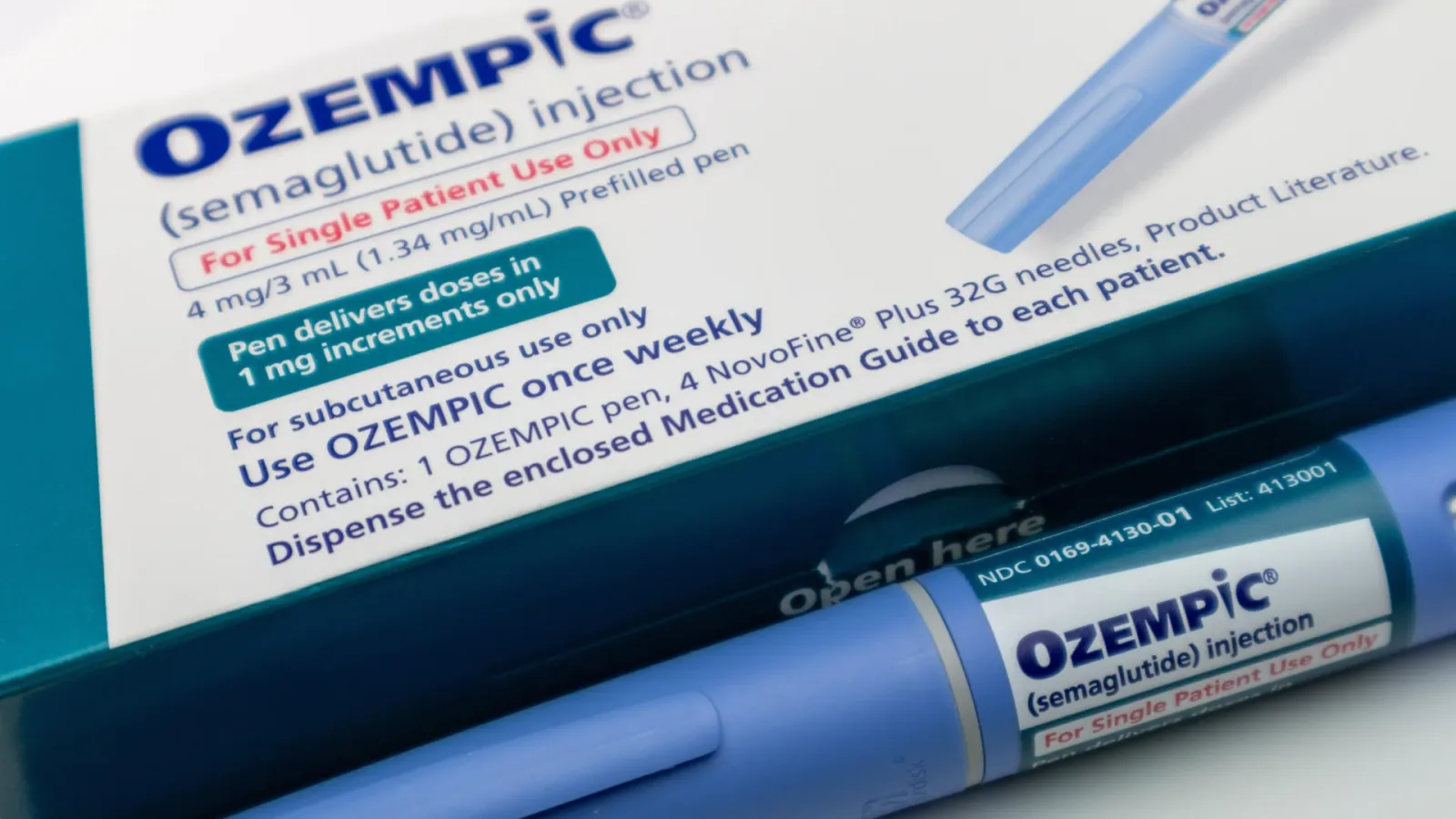

The landscape of obesity treatment has been dramatically reshaped by a new class of medications that mimic the body's natural hormones to promote weight loss. Drugs like Ozempic, Wegovy, and Mounjaro, which are based on glucagon-like peptide-1 (GLP-1) agonists, have achieved remarkable success in helping individuals lose significant weight. However, these powerful treatments are not without their drawbacks, with common side effects including nausea, vomiting, diarrhea, and abdominal discomfort.
In the pursuit of more refined and potentially better-tolerated obesity therapies, scientists are exploring novel approaches. A recent breakthrough from Stanford Medicine has unveiled a naturally occurring molecule, identified with the help of artificial intelligence, that shows promise as an alternative with a different mechanism of action. This molecule, a 12-amino-acid peptide named BRP, appears to act directly within the brain's appetite-regulating center, potentially leading to a more targeted approach with fewer side effects.
Understanding the Brain's Appetite Control
To appreciate the significance of BRP, it's crucial to understand how the brain controls appetite and satiety. Professor Giles Yeo, a leading expert in molecular neuroendocrinology, explains that due to the protective nature of the blood-brain barrier, only specific regions of the brain are directly influenced by circulating hormones related to hunger and fullness. These key areas are the hypothalamus and the hindbrain.
The Hypothalamus: The Hunger Sensor
The hypothalamus is often referred to as the brain's primary hunger sensor. It constantly works to assess the body's internal state, determining whether starvation is imminent or if energy stores are sufficient. Its role is fundamental in signaling the need for food and regulating overall energy balance.
The Hindbrain: The Satiety Signal
The hindbrain, on the other hand, plays a crucial role in processing signals related to fullness and satiety. It's responsible for the sensation of being full, and in some cases, the feeling of being uncomfortably stuffed – the kind of fullness experienced after a large holiday meal.
How Current GLP-1 Agonists Work and Their Side Effects
Current blockbuster weight-loss medications like Ozempic and Wegovy function by mimicking the action of GLP-1, a hormone naturally produced in the gut. These drugs are highly effective because they influence both the hypothalamus and the hindbrain. By acting on the hindbrain, they significantly enhance feelings of fullness, which naturally leads to reduced food intake and subsequent weight loss.
However, this dual action also explains a significant portion of their common side effects. Professor Yeo notes that the intense feelings of fullness and the associated nausea are often a direct consequence of the drugs' influence on the hindbrain. While effective for weight management, the gastrointestinal discomfort can be a barrier for some individuals, impacting their adherence to treatment.
BRP: A Targeted Approach to Appetite Regulation
The newly discovered molecule, BRP, offers a potentially different therapeutic pathway. Unlike GLP-1 agonists, BRP appears to primarily target the hypothalamus, the brain's hunger sensor. By focusing its action on this area, BRP may help to suppress appetite signals more directly, without as strongly influencing the hindbrain's satiety signals.
This targeted action could translate into a significant reduction in side effects commonly associated with GLP-1 mimics. Furthermore, early animal studies in mice have yielded encouraging results regarding body composition. In these trials, obese mice treated with BRP appeared to lose fat mass while preserving muscle mass. This is a critical distinction, as the loss of muscle mass can be a concern with some weight-loss strategies, as it can negatively impact metabolism.
The Power of AI in Drug Discovery
The discovery of BRP is as remarkable as its potential therapeutic benefits, thanks to the innovative use of artificial intelligence. The Stanford research team developed an AI tool named Peptide Predictor. This sophisticated program was designed to sift through the vast genetic landscape, analyzing approximately 20,000 human genes. Its objective was to identify potential hormone-like peptides – short chains of amino acids that could have biological activity.
Precision tracking for your journey
Join thousands using Shotlee to accurately track GLP-1 medications and side effects.
📱 Get the Shotlee App
Track your GLP-1 medications, peptides, and health metrics on the go with our mobile app!
The AI tool successfully identified 2,683 potential peptide candidates. From this extensive list, researchers further narrowed down the options, eventually testing about a hundred of the most promising candidates. BRP emerged as the standout molecule from this rigorous screening process.
Animal Trial Successes
In preclinical trials, obese mice that received daily injections of BRP demonstrated significant weight loss. In contrast, a control group of untreated mice continued to gain weight, highlighting the compound's efficacy in an animal model.
Professor Randy J. Seeley, a distinguished surgeon and researcher, expressed his admiration for the study's scope and methodology, stating, "The sheer audacity to sort through the huge number of peptides is truly breathtaking. I am in awe of the work."
The Road Ahead: Clinical Trials and Future Potential
While the discovery of BRP is a significant scientific achievement, the journey from laboratory finding to approved human therapy is a long and complex one. Katrin Svensson, a senior author of the study, has co-founded a company that is preparing to initiate human clinical trials in the near future. These trials will be crucial in determining BRP's safety and efficacy in humans.
Professor Seeley emphasizes the challenge of translating animal trial success to human outcomes, particularly concerning long-term safety. "The hardest thing to know is whether a drug based on this will have adequate safety to become an approved obesity therapeutic," he noted. "Obesity is a chronic condition that needs to be treated chronically. That means such drugs need to be quite safe so that people can use them for a long time."
Potential for Modification and Combination Therapies
Similar to how GLP-1 agonists are modified natural hormones designed for longer duration of action, BRP could potentially undergo similar alterations to optimize its pharmacokinetic profile for sustained therapeutic effects. Even if BRP proves successful, existing GLP-1 mimics will likely retain their clinical value. This is because they offer benefits beyond weight loss, such as a reduction in cardiovascular risk, which is a critical consideration for many individuals with obesity.
However, BRP represents a valuable addition to the growing arsenal of tools available for combating the global obesity crisis. Professor Yeo highlights the importance of having multiple treatment options:
"The more tools we have to help us reduce our body weight, the more people are likely to find their personal mix. If you're more likely to stay on the drug, you're more likely to keep the weight off."
With over a billion people worldwide affected by obesity, a condition that now surpasses famine as a leading cause of death, the need for effective and safe treatments is more urgent than ever. The development of molecules like BRP, discovered through innovative AI-driven research, offers hope for more personalized and tolerable solutions.
Practical Takeaways
- AI-Driven Discovery: Artificial intelligence is revolutionizing drug discovery by sifting through vast biological data to identify novel therapeutic candidates.
- Targeted Action: BRP's potential to target the hypothalamus, the brain's hunger center, may offer a different mechanism for appetite suppression compared to current GLP-1 drugs.
- Reduced Side Effects: A primary goal of BRP is to achieve weight loss with fewer gastrointestinal side effects, potentially improving patient adherence.
- Body Composition: Early animal studies suggest BRP may help preserve muscle mass while reducing fat, a crucial factor in long-term metabolic health.
- Future Therapies: BRP represents a promising avenue for future obesity treatments, potentially offering an alternative or complementary therapy to existing medications.
Conclusion
The discovery of BRP, a naturally occurring molecule identified by AI, marks a significant step forward in the search for more effective and better-tolerated obesity treatments. By potentially targeting the brain's hunger center directly, BRP could offer a new paradigm for weight management, addressing the limitations of current GLP-1 agonists. While human clinical trials are still on the horizon, this breakthrough underscores the power of advanced technology in medical research and offers a beacon of hope in the ongoing fight against the global obesity epidemic. For individuals managing their weight, having diverse and effective options like those potentially offered by BRP, alongside existing treatments, is paramount to achieving sustainable health outcomes.