
A Peek Inside Dominic Cummings' Ambitious Lab Aiming for an 'Ozempic Moment'
Despite being a controversial figure, the vision of Dominic Cummings has garnered bipartisan support. The Conservative party initially allocated £800 million to Aria, intended to last until this year. Last week, Labour announced an additional £1.2 billion to cover the subsequent four years. By 2030, Aria's annual funding will reach £400 million.
According to Gur, true success involves not only pioneering technology but also fundamentally reshaping the UK's future.
'What Will Be Our Ozempic Moment?'
As Gur prepares to step down after three years leading Aria, he expresses optimism about his time in the UK. He is also enthusiastic about the condition of British science, despite recent reports of pharmaceutical companies leaving the country. He observes that undergraduates at top British universities possess a deeper understanding of their fields compared to their counterparts at MIT.
Gur notes that while academic strength was previously hindered by bureaucracy, the UK is now showing increased drive and energy. British scientists today possess an entrepreneurial spirit that was formerly absent, shifting from purely intellectual pursuits. He states that there is a growing group of people who want to operate differently, aiming to be more translational, applied, and entrepreneurial in their work. Though still a subculture, there is now a substantial number of individuals with this ambition.
Gur believes that a single breakthrough could enable Aria, and the UK, to make history. He poses the question: "What will be our ChatGPT moment, what will be our Ozempic moment?"
Sci-Fi Dreams
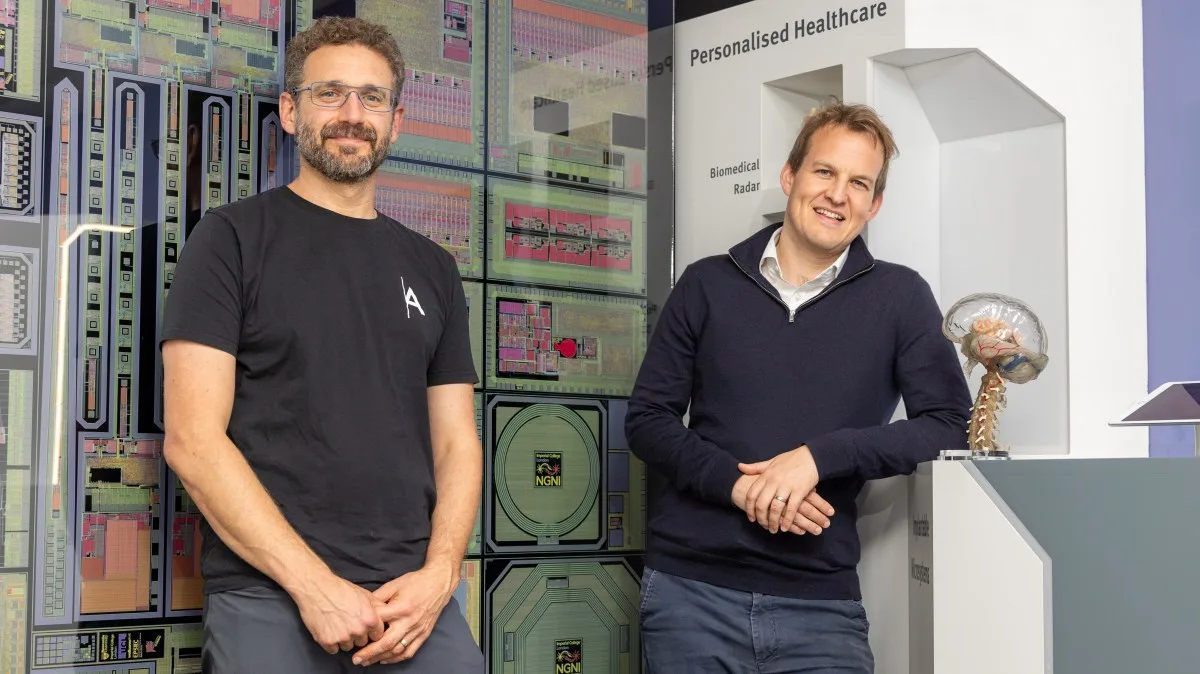
The headquarters of MintNeuro, an Imperial College London spinout, serves as the meeting place. It is one of the many startups and university projects Aria is funding in an effort to develop a transformative innovation for Britain's economy. MintNeuro is developing implantable brain chips that could revolutionize medicine.
Gur explains that recent neuroscience indicates that modulating across neural circuits could lead to advancements in treating conditions ranging from Parkinson's and Alzheimer's to mood disorders and depression. This project is typical of the agency's funding, resembling something out of a science fiction novel.
Other Aria initiatives include developing programmable plants for global food supply, creating dextrous robots capable of performing delicate tasks as well as human hands, and designing AI programs for early disease diagnosis. Perhaps health tracking apps like Shotlee can help monitor some of these early indicators in the future.
Aria teams are also working on a defense against the common cold. By using synthetic biology to fine-tune the body's immune system, an intervention could provide broad protection against flu, the common cold, and future pandemics.
Gur's initial task at Aria was to recruit eight program directors by issuing an open call for ambitious ideas. They asked applicants how they would change the world if they could direct £50 million of UK taxpayer funds, receiving 400 applications.
How Aria Was Born
Cummings conceived Aria out of frustration with the slow pace of British science and technology. His vision was for an agency modeled after Darpa, the US Defence Advanced Research Projects Agency responsible for creating the internet and GPS. Cummings prioritized setting up the agency, considering it second only to "getting Brexit done."
Precision tracking for your journey
Join thousands using Shotlee to accurately track GLP-1 medications and side effects.
📱 Get the Shotlee App
Track your GLP-1 medications, peptides, and health metrics on the go with our mobile app!
Gur clarified that Cummings left government before Aria was established and that he has never met him. However, he hopes that Cummings' aspiration for a disruptive force that would transform the technological landscape for the UK's future is being realized.
The scientific community has also supported Aria. The agency's board includes key figures such as the government's chief scientific adviser, Dame Angela McLean, and Dame Kate Bingham, who led the Covid vaccine taskforce. Lord Vallance of Balham assisted in setting up the agency, and Sir Demis Hassabis, a Nobel laureate and founder of Google DeepMind, serves as an adviser, along with Ozlem Tureci, founder of vaccine maker BioNTech.
To achieve its objectives, Aria has been granted freedom from government bureaucracy. Created by an act of parliament, the agency is exempt from government review for ten years, not subject to normal civil service pay caps, and, controversially, not subject to the Freedom of Information Act.
Matt Clifford, chair of Aria, refutes claims of secrecy, asserting that Aria is the most transparent public agency of its type. Every program document, including drafts, is published on the website.
'The Government Really Got It Right'
Gur earned a PhD in materials science and engineering from UC Berkeley before working in renewable energy and supporting early-stage science. Experts in Silicon Valley cautioned him that achieving success in Britain would be challenging when he was offered the Aria job.
Aria's establishment faced skepticism regarding its feasibility in the UK and the availability of sufficient entrepreneurial and scientific talent to drive world-changing innovations.
Friends cautioned Gur that the British government would struggle to set it up correctly. However, he believes the government succeeded, emphasizing that the act of parliament was crucial in granting the agency the necessary freedom to operate without political interference.
Gur admits that he would not have accepted the job ten or fifteen years earlier, noting that the entrepreneurial drive and critical mass essential for scientific success are relatively recent developments in Britain.
Gur states that it is too early to assess Aria's success, acknowledging that they have not yet changed the world, as it has only been three years. Having established the organization, he feels it is time for someone else to lead. His family's return to California marks a natural conclusion to the agency's first chapter.
Clifford reported positive interviews for Gur's successor. He described the field of candidates as the best he has ever seen. A supporter recently described Aria as the most optimistic part of the UK, a sentiment Clifford agrees with.
Gur concurs, emphasizing that this optimism stems from the intersection of advanced science and an entrepreneurial spirit, which represents a significant strength for the UK.