
European grocery retail trends in 2026 are marked by renewed momentum, driven by private labels, adjacent categories, mergers and acquisitions (M&A), and AI opportunities, even as margins face ongoing pressure. This analysis draws directly from McKinsey's latest annual report, The State of Grocery Retail Europe 2026, released in partnership with EuroCommerce and Europanel. In 2025, grocery sales grew by 3.4%, with consumer prices rising moderately by 2.9% and volume growth at 0.6%, alongside marginal downtrading of -0.1%.
CEOs identified cost and margin pressure as their top concern, yet executive sentiment improved, with a majority anticipating stable or improving market conditions. The report forecasts a relatively stable consumer environment in 2026 compared to the prior year, though Middle East conflicts could introduce volatility. Below, we break down the eight pivotal trends and four AI opportunities shaping the landscape, providing context on their implications for retailers, consumers, and the supply chain.
Key 2025 Performance Metrics Setting the Stage
Understanding baseline performance helps contextualize 2026 projections. Grocery sales expansion of 3.4% reflected balanced price (2.9%) and volume (0.6%) contributions, a shift from prior inflation-heavy growth. Downtrading eased to -0.1%, signaling consumer stabilization. These figures, sourced from EuroCommerce and Europanel data, underscore why grocers must prioritize efficiency and innovation amid subdued volume forecasts.
- Sales Growth: 3.4%
- Price Increase: 2.9%
- Volume Growth: 0.6%
- Downtrading: -0.1%
Volume is projected to grow at a modest 0.2% CAGR through 2030, driven by limited population increases and foodservice shifts, with inflation as the primary growth engine.
The Eight Trends Shaping European Grocery Retail in 2026
1. Polarised Consumer Recovery
The region experiences a two-speed recovery: low-income households seek promotions, while high-income ones trade up. Price pressure eases overall, but income and generational divides widen. Shoppers actively seeking savings dropped from 55% in 2023 to 46% in 2026, with promotion-seeking falling from 44% to 37%.
Medium- and high-income consumers are less price-sensitive over four years. Premium/high-quality food intent rose 1 percentage point since 2025, rebounding from -5% in 2023 to +3% in 2026. Convenience food demand increased 2 points, led by Gen Z and millennials. Healthier products hold steady demand, but willingness to pay varies: Gen Z/millennials trade up, while Gen X and boomers resist premiums.
Implications: Retailers should segment assortments by income and generation, balancing promotions with premium health/convenience options to capture polarized spending.
2. Opportunity for Convenience
A shift from home cooking boosts foodservice, growing at 6.8% CAGR (2022-2025) versus grocery's 4.8%. 47% of Gen Z and 40% of millennials consume food-to-go weekly, with ready-to-eat/heat intent up 7 and 2 points respectively. In grocery, immediate-consumption products grow ~7%, faster than the market, though price-led (negative volume).
Grocers capture a small but rapidly growing share, expanding via integrated foodservice, coffee concepts, ready-to-(h)eat extensions, and hot counters. Store layouts prioritize visibility and access, blurring grocery-foodservice lines.
Strategic Advice: Invest in store formats blending served and grab-and-go to compete with foodservice dominance.
3. Evolving Online Grocery and Omnichannel Dynamics
The online channel gains relevance variably. Nearly half of shoppers use different retailers online vs. in-store; one-third stay loyal across channels. Profitability improves, with operations breaking even fully allocated—e.g., Ahold Delhaize in 2025. Growth varies: declining in Portugal/Sweden, but intent remains positive elsewhere.
Adoption spans 20%+ in urban affluent areas to <5% rural. 12% use scheduled delivery weekly, 69% <monthly, half never online. Shoppers view online separately from physical, prioritizing value-for-money, quality, and app ease online; location, price, promotions offline. Of 40 analyzed retailers, 30 score higher online satisfaction.
Context: Omnichannel efforts persist, but channel separation demands tailored strategies per format.
Precision tracking for your journey
Join thousands using Shotlee to accurately track GLP-1 medications and side effects.
📱 Get the Shotlee App
Track your GLP-1 medications, peptides, and health metrics on the go with our mobile app!
4. Persistent Structural Costs
EBIT margins held at 2.8% in 2024-2025. 77% of CEOs cite cost/margin pressure as top focus for five years running. Labor inflation (5.1% average) outpaces food inflation (4.0%), with 2-3 point gaps in some markets. Capex-to-revenue rose to 2.9% from 2.8%, some at 6.0%.
Why It Matters: Structural labor and capex pressures necessitate automation and scale to protect profitability.
5. Growth Beyond the Basket
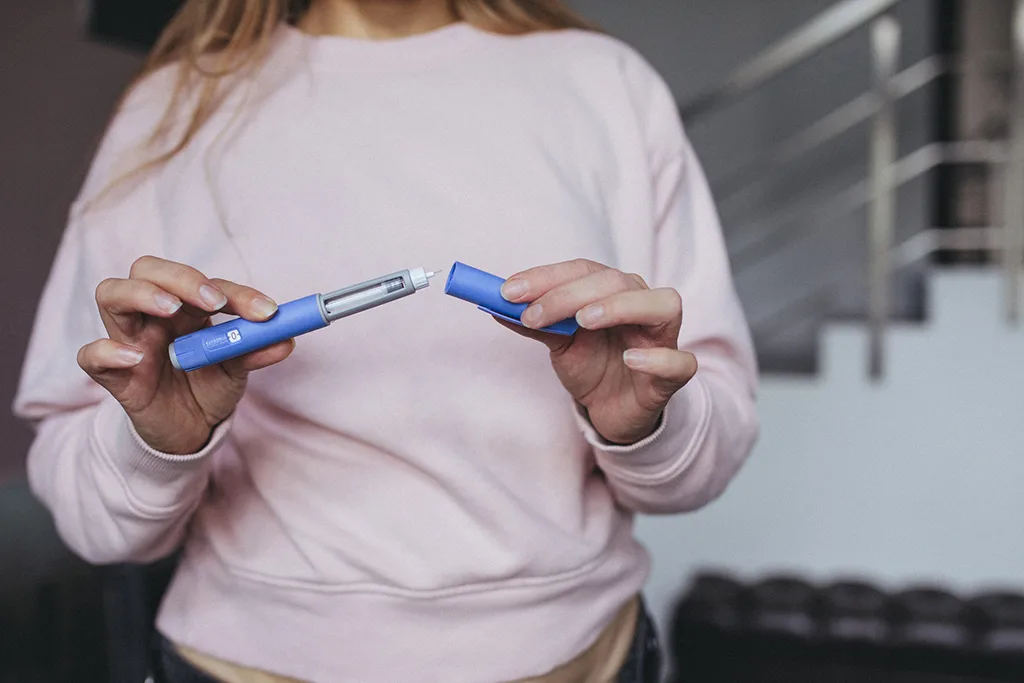
Footprint expansion wanes as competition intensifies; adjacencies gain importance. Premiumisation aids core growth, while wider GLP-1 drug use may reduce grocery revenues by <1%. Retail media leads adjacencies with 20% CAGR (2025-2028) and ~70% EBIT margins. Pharmacy, finance, logistics show mixed results.
Patient/Consumer Note on GLP-1: These medications for metabolic health could subtly shift consumption patterns, prompting grocers to diversify revenue streams proactively.
6. Making Scale an Advantage
Scale advantages private labels and tech investments. Large grocers leverage production economies and spread automation costs. Pan-European synergies emerge, e.g., Carrefour's Eureca platform and digital push. Discounters use cross-border buying/standardization.
M&A surged: 28 deals in 2025 vs. 19 in 2022 (+47%). Expect acceleration from IT costs, private-label rise.
7. From Labels to Brands
Private labels hit 40% value share in EU-11 (2025), via volume and quality shifts. Leaders gain 2-3x market share probability; private label/brand space trumps price. Growth stems from diverse tiers: budget, premium, organic, etc.
Analysis of 120 grocers confirms this as top share driver past six years.
8. Resetting CPG-Retailer Relationships
Move to strategic partnerships: joint innovation, exclusives, data/supply chain/retail media collaboration. Pressures include shrinking margins, private-label growth, small brands. Retailers face costs/flat volumes/46% savings seekers; CPGs low volumes/innovation/promos. Shareholder returns lag industries.
Brands narrowing private-label price gaps gain share; widening loses it.
Four AI Opportunities in Grocery Retail
The report spotlights AI for personalization, operations, supply chain, and customer experience, amplifying trends like scale and adjacencies. Though details are emerging, AI addresses cost pressures and consumer polarization effectively.
Key Takeaways for Grocers and Stakeholders
- Prioritize private labels and scale via M&A for competitive edges.
- Segment consumers by income/generation for targeted assortments.
- Expand convenience and adjacencies like retail media.
- Tackle structural costs through tech and partnerships.
- Bridge online-offline gaps with channel-specific satisfaction drivers.
Conclusion: Navigating Stability and Opportunity
European grocery retail in 2026 offers stability post-3.4% 2025 growth, but success hinges on adapting to these eight trends. Retailers mastering private labels, scale, and adjacencies while resetting CPG ties will lead. Monitor geopolitics and GLP-1 impacts for agile strategies. For deeper dives, explore McKinsey's full report.